St Ambrose
Saint4th century · Feast December 7
A Roman governor unexpectedly chosen as bishop before baptism who became a courageous teacher and mentor.
Governor
Germany
Saint5th century · Feast August 28
Also known as Aurelius Augustinus, Augustine, Aurelius Augustine, Augustine of Thagaste, St Augustine
A restless seeker who found Christ after years of intellectual and moral struggle, St Augustine became a bishop, pastor and writer whose teaching on grace, love and the human heart profoundly shaped Western Christianity.
God of truth and mercy, through the intercession of St Augustine, draw our restless hearts towards you. Give us courage to face our past honestly, humility to change our minds and perseverance when our desires are divided. Unite our search for understanding with love, prayer and service. May every gift of intellect, friendship and leadership lead us more deeply into Christ. Amen.
Augustine was born on 13 November 354 in Thagaste, a town in the Roman province of Numidia in North Africa. His father, Patricius, was initially a pagan, while his mother, Monica, was a committed Christian. Augustine was enrolled as a Christian catechumen as a child but was not baptised during his early years.
His family recognised his exceptional intellectual ability and made significant sacrifices for his education. Augustine studied grammar and literature at Madaura before continuing his training in rhetoric at Carthage. He became highly ambitious and hoped that education, eloquence and professional success would bring him fulfilment.
While still young, Augustine entered a long-term relationship with a woman whose name he never records in his surviving writings. Their son, Adeodatus, was born when Augustine was approximately eighteen. Augustine later spoke warmly of his son’s intelligence and spiritual promise.
Around this period, Augustine read Cicero’s lost work Hortensius. The book awakened in him a passionate desire for wisdom, but he found the style and apparent simplicity of the Bible disappointing. Seeking an explanation of good, evil and the material world that appeared intellectually satisfying, he became associated with Manichaeism.
Augustine remained connected to the Manichaean movement for approximately nine years. He was attracted by its claim to provide rational explanations for the conflict between good and evil, but gradually became dissatisfied with its teachers and doctrines. His search then passed through scepticism and engagement with different philosophical traditions.
He taught rhetoric in Thagaste and Carthage before travelling to Rome in 383. In 384 he obtained a prestigious position as professor of rhetoric in Milan. There he encountered St Ambrose, whose preaching showed him that Scripture could be interpreted with greater intellectual depth than Augustine had previously recognised.
Augustine’s reading of philosophical works associated with Neoplatonism helped him understand God as spiritual rather than material. The letters of St Paul confronted him more directly with Christ, grace and the moral transformation he had long postponed.
His intellectual difficulties were gradually being resolved, but he remained divided in his will. He desired a new life while still feeling attached to ambition, sexual relationships and personal control. In the summer of 386, during an intense struggle in a garden in Milan, he heard a childlike voice repeating words he understood as “take and read.” He opened the letters of St Paul and read Romans 13:13–14. He experienced this moment as the decisive surrender of his resistance to God.
Augustine withdrew with family and friends to Cassiciacum, where they prepared for baptism through prayer, conversation and philosophical reflection. During the Easter Vigil on 24 April 387, Augustine was baptised in Milan by St Ambrose together with his son Adeodatus and his friend Alypius.
Augustine then planned to return to North Africa and establish a community devoted to God. While awaiting passage at Ostia, he and Monica shared the profound spiritual conversation later described in the Confessions. Monica became ill and died shortly afterwards. Augustine’s account of her death is one of his most personal reflections on grief, faith and eternal life.
After returning to Africa, Augustine established a community at Thagaste. His son Adeodatus died while still young. Augustine subsequently travelled to Hippo, intending to recruit a possible member for the community. While attending church there in 391, he was unexpectedly chosen by the congregation and ordained a priest despite his reluctance.
As a priest, Augustine founded another religious community, preached, studied Scripture and assisted the ageing Bishop Valerius. In 395 he was ordained a bishop and subsequently became Bishop of Hippo. He remained in that ministry until his death.
Augustine’s episcopal life was demanding. He preached frequently, instructed catechumens, judged disputes, cared for people in poverty, formed clergy and religious communities, answered correspondence and participated in Church councils. His surviving sermons reveal a pastor speaking directly to ordinary Christians rather than only an academic theologian.
He also became involved in major theological and ecclesial controversies. He wrote against Manichaeism, the religion he had formerly followed. He argued extensively against the Donatist movement, which had divided North African Christianity, and later defended the necessity of divine grace against positions associated with Pelagius and his followers.
Augustine initially emphasised argument and persuasion in addressing the Donatist division but later defended the use of imperial pressure to bring separated Christians into Catholic unity. This part of his legacy is historically important and should not be presented uncritically. His support for religious coercion reflected the political and ecclesial assumptions of his time but remains morally troubling when judged in light of religious freedom and the dangers of institutional force.
Among Augustine’s best-known works is the Confessions, written as a prayer to God rather than as a modern autobiography. It recounts his memories, sins, relationships, intellectual development and conversion while reflecting on memory, desire, Scripture and the action of grace.
After the sack of Rome in 410, some critics blamed Christianity for the weakening of the Roman world. Augustine responded through The City of God, a vast work distinguishing the earthly city shaped by disordered love from the City of God formed by love of God. He argued that no political society should be confused with the final Kingdom of God.
Other major works include On the Trinity, On Christian Doctrine, the Enchiridion on Faith, Hope and Love, biblical commentaries, letters, sermons and the Rule associated with his communities. Near the end of his life, Augustine composed the Retractions, reviewing his earlier works and identifying points requiring correction or clarification. This willingness to revise himself is an important aspect of his intellectual integrity.
In 430, the Vandals placed Hippo under siege. Augustine remained with his people and other displaced clergy. During his final illness, he asked for the penitential psalms to be displayed where he could read them and spent his remaining days in prayer and repentance.
Augustine died on 28 August 430 at the age of seventy-five. His works survived the destruction that followed and became foundational for later Christian reflection on grace, freedom, desire, sin, the Church, the sacraments, Scripture, society and the human search for God.
His influence extends far beyond one school of theology. Catholic, Orthodox and Protestant traditions have all received, debated and interpreted his writings in different ways. The Church venerates him as a Father and Doctor whose central insight remains deeply personal: the human heart cannot finally rest in status, pleasure, knowledge or power, because it was created for communion with God.
Augustine lived in the final century of Roman authority in the western Mediterranean. Roman North Africa was wealthy, urbanised and intellectually active, and it was one of the major centres of Latin Christianity.
Christianity was legally established and increasingly supported by imperial authority, but the Church remained divided by major theological and ecclesial conflicts. In North Africa, the Donatist division concerned the identity, authority and sacramental life of the Church and was entangled with regional, social and political tensions.
Augustine’s intellectual world included classical rhetoric, Roman education, Neoplatonic philosophy, Manichaeism and Christian biblical interpretation. His life therefore unfolded at the meeting point of classical culture and a rapidly developing Christian intellectual tradition.
The sack of Rome by the Visigoths in 410 shocked people who had regarded the city and its empire as effectively permanent. Augustine’s City of God responded by challenging both pagan nostalgia and the temptation to identify any earthly political system with the Kingdom of God.
Near the end of Augustine’s life, Vandal forces crossed into North Africa and besieged Hippo. His death occurred as the political and institutional world in which he had served was undergoing violent transformation.
A restless search for truth fulfilled in Christ; interior prayer; honest confession; radical dependence upon divine grace; Scripture interpreted within the faith of the Church; love as the true measure of Christian life; friendship and community as a shared search for God; intellectual inquiry joined to humility; pastoral service; continual conversion; and the ordering of every human desire towards God.
St Augustine is an especially important companion for people who have spent years searching through different beliefs, philosophies or lifestyles and fear that they have waited too long to return to God. His conversion shows that grace can work through a long and complicated intellectual and moral journey.
He speaks to people who cannot accept a faith that appears to require them to stop thinking. Augustine’s path did not involve abandoning reason. He came to believe that faith and reason could correct, deepen and support one another.
His account of a divided will is highly relevant to people who know what they believe they should do but repeatedly postpone change. He understood the experience of sincerely wanting freedom while still clinging to habits, relationships, status or pleasure.
Augustine can accompany people carrying regret about sexual decisions or complicated past relationships. His story should not be used to shame them. Its central message is not that a person’s past makes them permanently impure, but that no history lies beyond the transforming action of grace.
He is also relevant to parents. Augustine loved his son Adeodatus and was profoundly affected by his early death. His life therefore includes fatherhood, grief and the painful recognition that conversion does not protect a person from loss.
His honesty makes him meaningful to people engaged in examination of conscience, recovery or personal reflection. The Confessions does not merely list past failures; it examines the desires, fears and false goods beneath them.
Writers, scholars and public teachers may find particular value in Augustine’s Retractions. Near the end of his career, he reviewed his own enormous body of work and openly identified statements that required correction. Intellectual maturity, in his example, includes the willingness to revise oneself.
For bishops, priests, teachers and organisational leaders, Augustine offers a model of combining serious study with pastoral availability. He also provides a warning: intelligence, strong conviction and a desire for unity do not guarantee that every method used in defence of truth will be just.
His experience during the siege of Hippo speaks to religious and civic leaders serving during institutional breakdown, war or forced migration. Augustine could not preserve the political world around him, but he remained with the people entrusted to him and continued praying, teaching and writing.
People turn to St Augustine of Hippo in matters of:
13 November 354
Born in Thagaste in Roman Numidia to Patricius and Monica.
c. 366–369
Studies grammar and classical literature at Madaura.
c. 371
Moves to Carthage to continue his education in rhetoric.
c. 372
His son Adeodatus is born.
c. 373
Reads Cicero’s Hortensius and begins an intense search for wisdom; becomes associated with Manichaeism.
c. 375–383
Teaches rhetoric in Thagaste and Carthage.
383
Leaves North Africa and moves to Rome.
384
Appointed professor of rhetoric in Milan and begins listening to the preaching of St Ambrose.
August 386
Experiences his decisive conversion while reading Romans 13:13–14.
24 April 387
Baptised by St Ambrose in Milan with Adeodatus and Alypius.
late 387
Monica dies at Ostia while they are preparing to return to North Africa.
388
Returns to Thagaste and establishes a community devoted to prayer and study.
c. 389–390
His son Adeodatus dies while still young.
391
Ordained a priest at Hippo.
395
Ordained bishop and begins his episcopal ministry at Hippo.
c. 397–400
Writes the Confessions.
411
Participates in the Conference of Carthage addressing the Donatist division.
410
Rome is sacked by the Visigoths, prompting questions Augustine later addresses in The City of God.
c. 413–426
Writes The City of God.
426
Names the priest Heraclius as his intended successor and begins devoting more time to reviewing his writings.
c. 426–427
Completes the Retractions, reviewing and correcting his earlier works.
May 430
Vandal forces begin the siege of Hippo.
28 August 430
Dies at Hippo during the siege after preparing through prayer and the penitential psalms.
August 28 · Memorial · Global
St Augustine, Bishop and Doctor of the Church
Memorial in the General Roman Calendar
August 28 · Solemnity · Religious order
St Augustine, Bishop and Doctor of the Church
Solemnity of Our Father St Augustine in the Augustinian calendar
Source-quality status: verified
Saint4th century · Feast December 7
A Roman governor unexpectedly chosen as bishop before baptism who became a courageous teacher and mentor.
Saint6th–7th century · Feast September 3
A Roman administrator and monk reluctantly drawn into papal leadership during crisis.
Saint4th–5th century · Feast September 30
A brilliant and difficult Scripture scholar whose Latin translation work shaped Western Christianity.
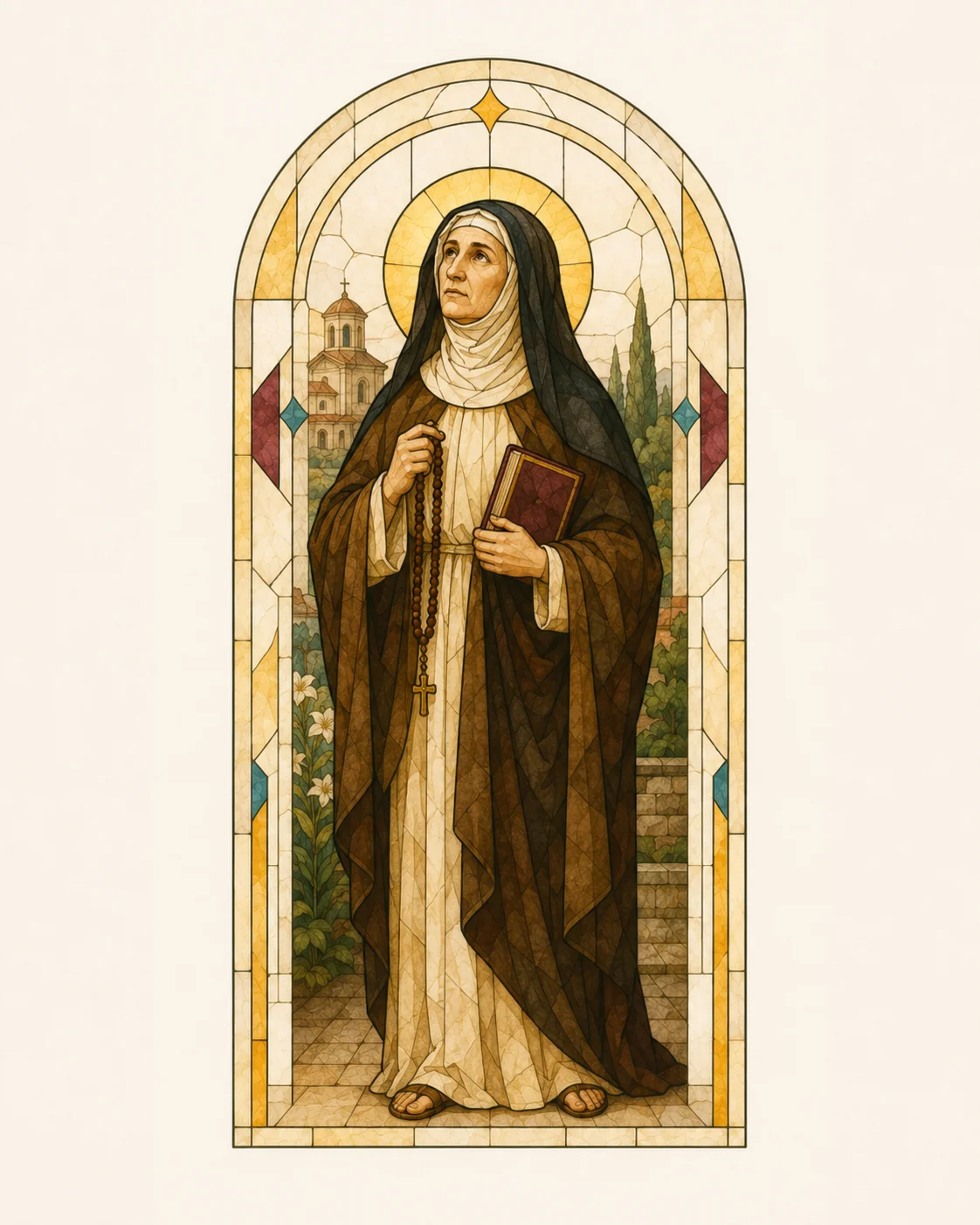
Saint4th century · Feast August 27
A faithful wife and mother whose patient love, honest counsel and persevering prayer accompanied her family towards Christ, St Monica is remembered especially for witnessing the conversion and baptism of her son Augustine.
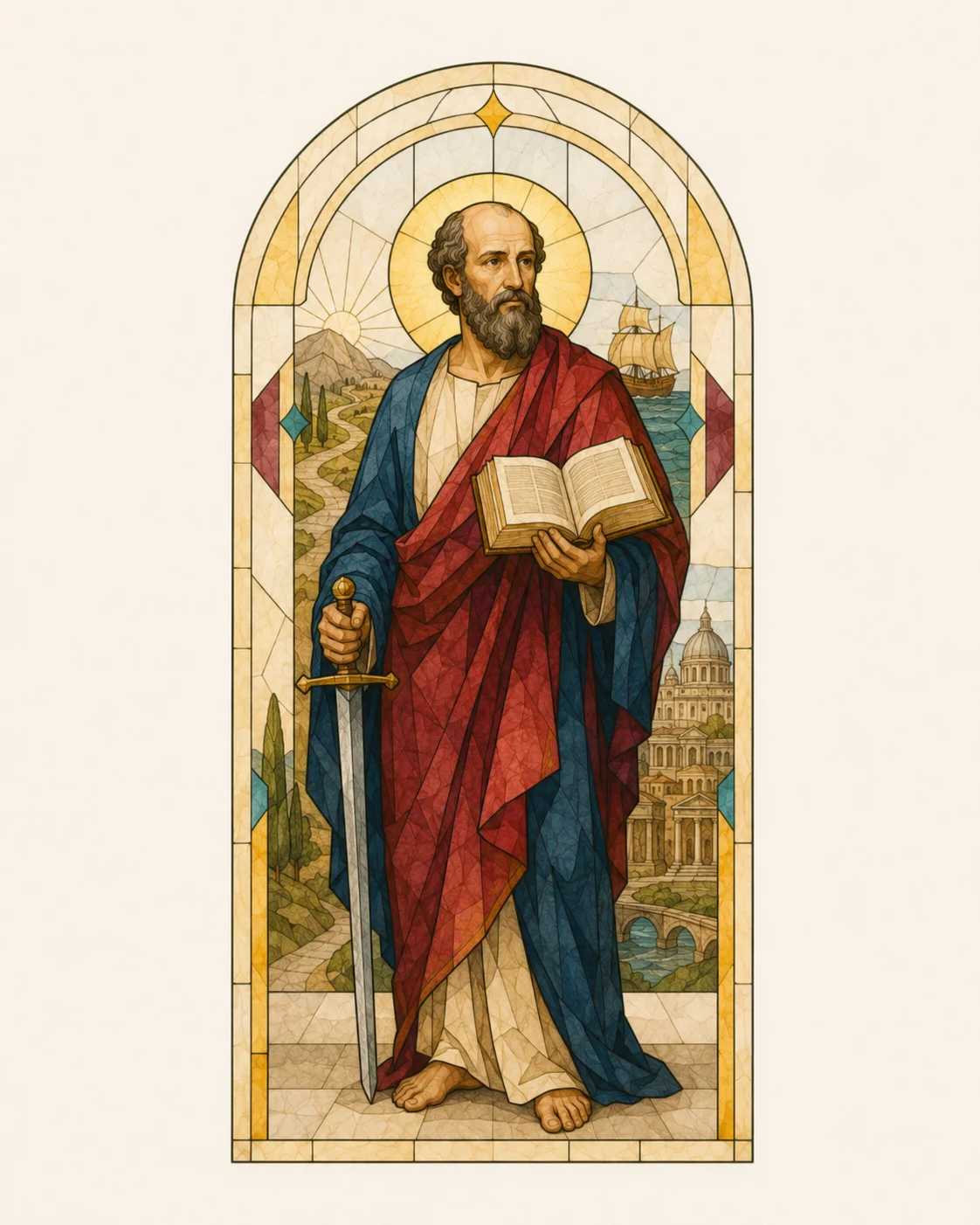
Saint1st century · Feast June 29
St Paul was a Jewish Pharisee and Roman citizen whose encounter with the risen Christ transformed him from a persecutor of the Church into the Apostle to the Gentiles, missionary, letter writer and martyr in Rome.
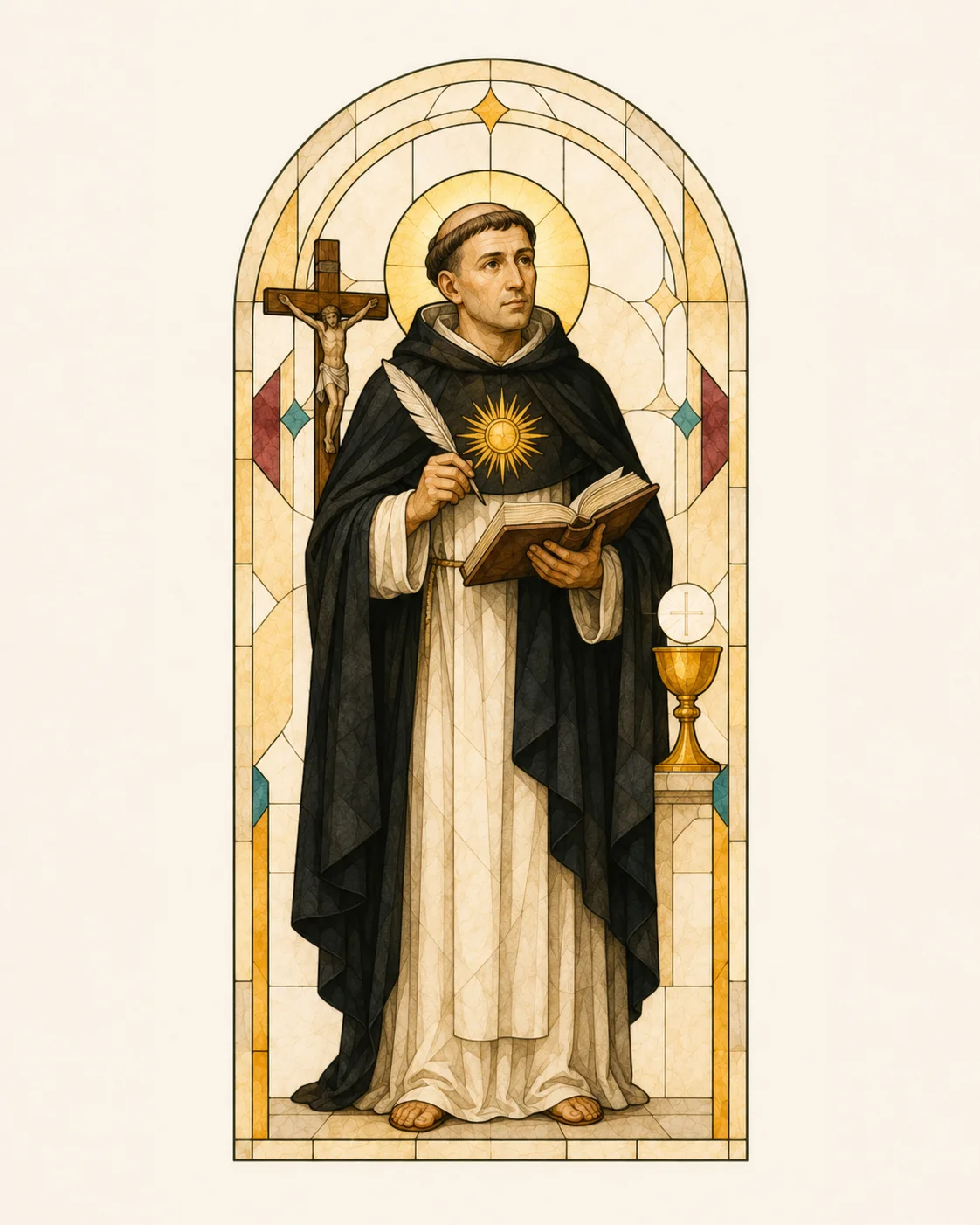
Saint13th century · Feast January 28
A Dominican friar whose prayerful search for truth united faith and reason, St Thomas Aquinas became one of the Church’s greatest theologians and showed that rigorous study can become an act of love for God and others.