Thematic
Saints for Family Life
Married saints, parents and family companions for the honest work of everyday family life.
7 days10 min / day
Saint4th century · Feast August 27
Also known as Monica of Hippo, Monica of Thagaste, Monica of Tagaste, Monnica, Saint Monica
A faithful wife and mother whose patient love, honest counsel and persevering prayer accompanied her family towards Christ, St Monica is remembered especially for witnessing the conversion and baptism of her son Augustine.
Faithful God, through the intercession of St Monica, strengthen all who carry concern for someone they love. Teach us to pray without despair, to speak with wisdom, to act with courage and to entrust what we cannot control to you. Protect families living through conflict, comfort widows and grieving parents, and draw those who have wandered towards the fullness of truth and love in Christ. Amen.
Monica was born around 331 in Thagaste, a town in the Roman province of Numidia in North Africa. She was raised within a Christian family of some means. Much of what is known about her comes from the Confessions of her son, St Augustine, particularly his extended account of her life and death in Book IX.
Augustine remembered Monica as a woman of strong character, practical wisdom and deep faith. He recalled that an elderly household servant played an important part in her childhood formation. Monica also told him that, while still young, she had gradually developed a habit of secretly drinking wine when sent to draw it from the family cellar. A servant’s harsh rebuke brought the habit to her attention, and she abandoned it. Augustine presented the episode as an example of correction, self-knowledge and grace rather than as the defining feature of her youth.
When she reached marriageable age, Monica was given in marriage to Patricius, a landowner who was not then a Christian. They had three children: Augustine, Navigius and a daughter whose name has not survived.
Augustine describes Patricius as socially generous but quick-tempered and unfaithful within the marriage. Monica sought to avoid responding while he was angry and waited for calmer opportunities to explain herself. She also experienced tension with her mother-in-law but eventually established a more peaceful relationship with her.
Monica’s Christian witness influenced her household. Patricius eventually became a Christian and received baptism shortly before his death. After being widowed, Monica assumed responsibility for her children and the family’s affairs.
Augustine was intellectually gifted but increasingly distanced himself from the Catholic faith in which Monica had raised him. He pursued ambition, entered a long-term sexual relationship and became associated with Manichaeism. His choices caused Monica deep distress.
Her concern was not passive. She prayed, wept, challenged him, sought guidance and continued accompanying him even when he rejected her beliefs. At times her intensity could be difficult for Augustine, but her love was directed towards his ultimate good rather than towards controlling every detail of his life.
In 383, Augustine decided to leave Carthage for Rome. Monica intended to travel with him, but Augustine deceived her and sailed while she remained praying at a chapel near the harbour. She later followed his journey and eventually joined him in Milan.
In Milan, Monica became closely connected with the Catholic community led by St Ambrose. She participated in the Church’s prayer during a period of conflict involving the imperial court and the Arian controversy. She also accepted Ambrose’s pastoral direction when local customs differed from the religious practices she had known in North Africa.
Monica witnessed the gradual transformation she had desired for Augustine. His intellectual objections to Christianity weakened through the preaching of Ambrose, his engagement with philosophy and his reading of Scripture. In 386 he underwent his decisive conversion.
Augustine withdrew to Cassiciacum with Monica, his son Adeodatus and several friends to prepare for baptism and a new form of Christian life. Monica participated actively in their conversations and was respected for the wisdom of her contributions.
During the Easter Vigil of 387, Augustine, Adeodatus and Alypius were baptised by St Ambrose in Milan. For Monica, this was the fulfilment of many years of prayer and perseverance.
The group then began travelling towards North Africa, intending to establish a community devoted to prayer and service. While awaiting passage at Ostia, Monica and Augustine shared a profound conversation at a window overlooking a garden. Together they contemplated the joy of eternal life and briefly experienced what Augustine described as a shared ascent of the heart towards divine Wisdom.
Soon afterward, Monica told Augustine that the principal hope keeping her in this life had been fulfilled: she had seen him become a Catholic Christian and a servant of God. Within days she became ill with a fever.
When her sons expressed concern that she would die and be buried far from her homeland and her husband’s grave, Monica showed that her attachment to a particular burial place had fallen away. She asked only that they remember her at the Lord’s altar wherever they might be.
Monica died at Ostia in 387, in the fifty-sixth year of her life. Augustine’s account of his restrained grief, eventual tears and prayers for her remains one of the most personal descriptions of bereavement in early Christian literature.
Monica was buried at Ostia. Her remains were later transferred to the Basilica of Saint Augustine in Rome, where they are venerated today.
The Church remembers Monica not merely because Augustine became famous, but because her own life demonstrates mature faith within marriage, parenthood, widowhood, disappointment and grief. Her perseverance was active, discerning and rooted in confidence that another person’s conversion ultimately belongs to God.
Monica lived in Roman North Africa during the fourth century, when Christianity was moving from a formerly persecuted religion towards a prominent place within imperial society. North Africa possessed flourishing cities, schools and Christian communities but was also marked by serious theological and ecclesial conflict.
Marriage was shaped by Roman law and a strongly patriarchal social order. Women possessed fewer legal and social protections than in many modern societies, and marriages could be arranged between families. Monica’s actions must be understood within that setting rather than treated as a complete model for every modern marriage.
Augustine’s education and professional career connected the family with Carthage, Rome and Milan. Monica therefore lived not only as a North African wife and mother but also as a traveller who crossed the Mediterranean and adapted to different local Christian customs.
The Church in Milan was experiencing tension between Nicene Christians led by Ambrose and the Arian-aligned imperial court. Monica joined the Catholic community in prayer during this period and demonstrated her willingness to receive pastoral guidance from the local bishop.
Her death at Ostia occurred while the family was preparing to return to Africa and begin a shared Christian community. The account therefore stands at the transition between Augustine’s conversion and his later ministry.
Persevering intercession; faith lived within marriage and family life; patient but active love; trust in God’s timing; practical wisdom; honest correction; sacramental devotion; prayer for conversion; adaptability within the Church; contemplation; hope in eternal life; and surrender of loved ones to God.
St Monica speaks especially to parents who are worried about children who have rejected the faith, entered harmful relationships or seem to be moving in a destructive direction. Her life encourages persistent prayer without pretending that parents can control another adult’s decisions.
She is meaningful to people living in religiously divided families or marriages. Monica continued to practise her faith without treating Patricius merely as an enemy or a project. Her witness involved patience, timing, example and honest conversation.
Her story must not be used to tell victims of domestic violence that holiness requires them to remain in danger. Augustine’s description reflects a fourth-century patriarchal society and reports behaviour from Patricius that should not be romanticised. Modern application should emphasise safety, appropriate support and the dignity of the person experiencing mistreatment.
Monica also speaks to people who feel responsible for another person’s conversion. She prayed, advised and accompanied Augustine, but she could not complete his conversion for him. Her example can help family members distinguish faithful love from anxiety, manipulation or constant surveillance.
Her willingness to follow Augustine across the Mediterranean shows determination and courage, but her life also included learning when to release control. At Ostia, she recognised that the hope she had carried for years had been fulfilled and entrusted both her future and her burial to God.
She is a valuable companion for widows and single parents carrying responsibility for a family after bereavement. She experienced the death of her husband and continued managing family life while remaining deeply concerned for her children.
The conversation at Ostia makes Monica relevant beyond family intercession. She was also a contemplative Christian capable of profound theological reflection and spiritual friendship. She should not be reduced to a worried mother who cried until her son changed.
Her final request to be remembered at the altar speaks to Catholics preparing for death, grieving relatives and praying for the dead. It reflects confidence in the Eucharist, the communion of saints and resurrection rather than anxiety about the location of her grave.
People turn to St Monica in matters of:
c. 331
Born into a Christian family at Thagaste in Roman Numidia.
c. 353
Marries Patricius, a landowner who is not yet Christian.
13 November 354
Gives birth to Augustine at Thagaste.
c. 355–360
Gives birth to two further children, Navigius and a daughter whose name is unknown.
c. 370–371
Patricius receives baptism and dies shortly afterward, leaving Monica a widow.
c. 373
Augustine becomes associated with Manichaeism, beginning a prolonged period of religious conflict and prayer within the family.
383
Augustine secretly sails from Carthage to Rome while Monica remains behind.
c. 385
Joins Augustine in Milan and becomes involved in the Catholic community led by St Ambrose.
386
Supports Augustine during his decisive conversion and preparation for baptism.
24 April 387
Witnesses the baptism of Augustine, Adeodatus and Alypius by St Ambrose in Milan.
387
Shares a profound contemplative conversation with Augustine while awaiting passage at Ostia.
387
Dies at Ostia after a nine-day illness, while the group is preparing to return to North Africa.
August 27 · Memorial · Global
St Monica
Memorial in the General Roman Calendar
August 27 · Feast · Religious order
St Monica — Augustinian Calendar
Feast in the Augustinian calendar
Source-quality status: verified
Thematic
Married saints, parents and family companions for the honest work of everyday family life.
Thematic
A short pathway with saints whose lives passed through anxious seasons — and the small practices that steadied them.
Saint4th century · Feast December 7
A Roman governor unexpectedly chosen as bishop before baptism who became a courageous teacher and mentor.
Saint5th century · Feast August 28
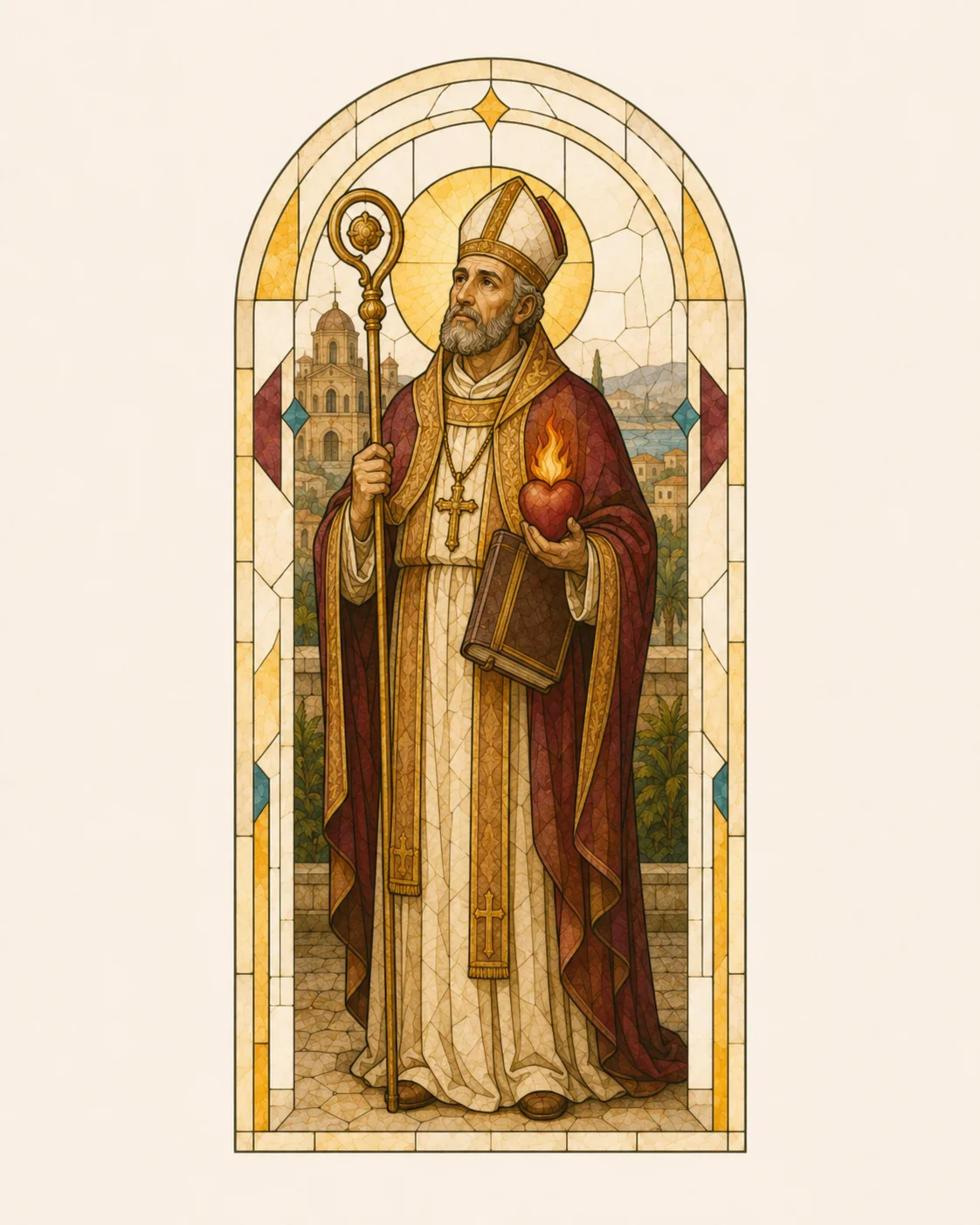
A restless seeker who found Christ after years of intellectual and moral struggle, St Augustine became a bishop, pastor and writer whose teaching on grace, love and the human heart profoundly shaped Western Christianity.
Saint20th century · Feast April 28
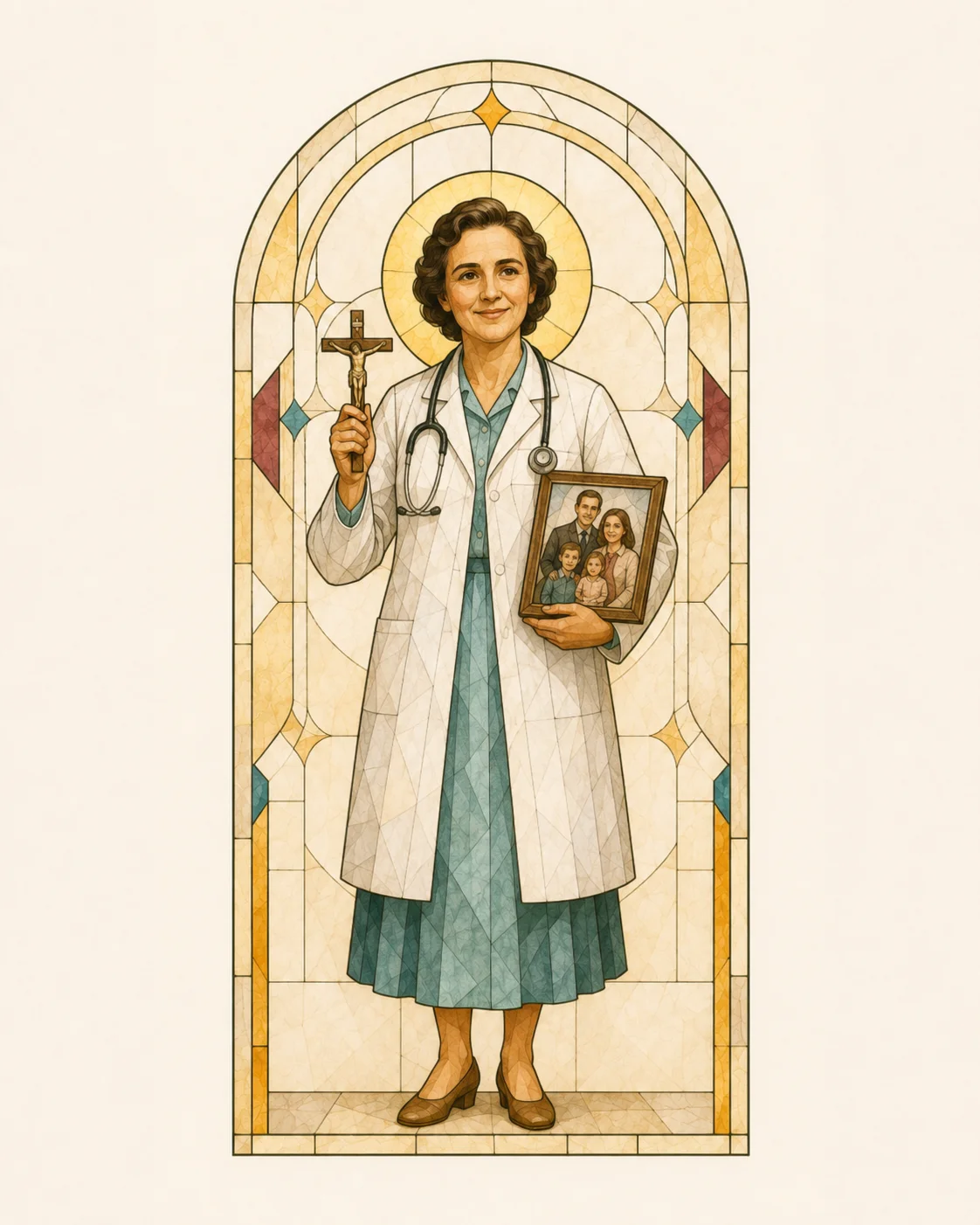
An Italian physician, wife and mother who lived medicine and family life as Christian vocations, St Gianna united professional service, joyful faith and courageous love within the ordinary responsibilities of modern life.