
Saint1st century · Feast June 29

St Paul the Apostle

Also known as Paul of Tarsus, Saul of Tarsus, Saint Paul, Saul, Paul, Apostle Paul, Apostle to the Gentiles, Teacher of the Gentiles, Paulus

Apostle to the Gentiles
Apostle
Martyr
Teacher of the Gentiles
Vessel of Election

St Paul was a Jewish Pharisee and Roman citizen whose encounter with the risen Christ transformed him from a persecutor of the Church into the Apostle to the Gentiles, missionary, letter writer and martyr in Rome.

Pray with St Paul the Apostle

A short prayer

Lord Jesus Christ, you met Saul upon the road to Damascus, confronted the harm he had done and called him to carry your name among the nations. When pride or certainty blinds me, give me the humility to receive correction. When my past makes me feel unworthy, teach me to trust your grace without avoiding responsibility for the harm I have caused. Through the intercession of St Paul, give me courage to follow your call, perseverance in difficulty and wisdom to communicate your Gospel with truth and love. Unite me more closely to your Body, the Church, and help me use every gift you have given me in service of others. Amen.

The story of their life

St Paul was born with the Jewish name Saul in Tarsus, the principal city of Cilicia in the eastern Roman Empire. His exact birth year is unknown, although a date around AD 8 is a reasonable reconstruction from the age descriptions preserved in Acts and Philemon. Paul identified himself as an Israelite from the tribe of Benjamin, circumcised on the eighth day and formed as a Pharisee. Acts additionally presents him as a Roman citizen from birth and as a student educated in Jerusalem under the respected teacher Gamaliel.

Tarsus stood at the meeting point of Jewish, Greek and Roman cultures. Paul belonged to the Jewish diaspora and wrote in Greek, while his Roman citizenship later gave him significant legal protections. Acts describes his trade with the Greek word skēnopoios, traditionally translated as tentmaker. This may have involved working with leather, linen or the coarse goat-hair material used for tents and mats. Paul continued supporting himself through manual work during parts of his missionary ministry.

Paul’s Jewish name was Saul, while Paul was his Roman name. The New Testament does not say that Jesus changed his name during his conversion. Acts initially calls him Saul and later introduces him as “Saul, also known as Paul” when his mission among Gentiles becomes prominent. He therefore probably possessed both names before becoming a Christian, as was common among Jews living within the wider Greco-Roman world.

Paul was initially a determined opponent of the early Christian movement. He believed that the proclamation of Jesus as the crucified and risen Messiah threatened the faithfulness of Israel’s ancestral traditions. Acts first mentions Saul at the martyrdom of St Stephen, where the witnesses placed their cloaks at his feet. Saul approved of Stephen’s death and subsequently entered homes, arrested Christian men and women and attempted to destroy the Church. Paul later acknowledged this persecution repeatedly in his own letters.

While travelling towards Damascus with authority to arrest followers of Jesus, Paul experienced the decisive event of his life. Acts recounts that a light from heaven surrounded him, that he fell to the ground and that he heard the risen Jesus ask, “Saul, Saul, why are you persecuting me?” The identification of Christ with his persecuted people became fundamental to Paul’s later understanding of the Church as the Body of Christ.

Acts describes Paul as being blinded and led into Damascus, where he fasted for three days. The Lord sent a Christian named Ananias to him. Despite knowing Saul’s reputation, Ananias addressed him as a brother, laid hands upon him and announced that God had chosen him as a witness. Paul regained his sight, received Baptism and began proclaiming that Jesus is the Son of God. None of the three accounts of this event in Acts mentions a horse. The horse found in later paintings is an artistic addition rather than a detail of Scripture.

Paul’s letters describe the event less as an abandonment of Israel than as a revelation of Jesus Christ and a divine call to proclaim him among the Gentiles. Paul believed that the God of Israel had revealed Israel’s Messiah and commissioned him for a new mission. After his encounter with Christ, Paul travelled into Arabia and returned to Damascus. Three years later, according to Galatians, he visited Jerusalem and spent fifteen days with Cephas, or Peter, while also meeting James, the brother of the Lord. Acts credits Barnabas with introducing him to an understandably cautious Christian community.

Opposition forced Paul to leave Damascus, reportedly escaping through an opening in the city wall in a basket. He spent time in his native region of Cilicia before Barnabas brought him to Antioch in Syria. Antioch became the principal base for the mission to Gentiles. The community there sent Barnabas and Paul to Cyprus and the cities of southern Asia Minor. Their preaching established Christian communities, but it also brought resistance, expulsion and violence. At Lystra, Paul was stoned and left for dead, yet he returned to encourage the new disciples.

The reception of Gentiles raised one of the earliest Church’s most difficult questions: whether Gentile converts needed to be circumcised and observe the full Mosaic Law. Acts narrates a formal assembly in Jerusalem, while Paul describes a Jerusalem meeting in Galatians. These accounts are commonly connected, although their exact chronological relationship remains debated. Paul received recognition for his mission to the Gentiles, while Peter’s mission was principally associated with the circumcised. Paul and Barnabas were also asked to remember the poor, a responsibility Paul pursued through a collection for the Church in Jerusalem.

Paul later confronted Peter at Antioch when Peter withdrew from table fellowship with Gentile Christians under pressure from others. Paul believed that this behaviour endangered the truth that Jewish and Gentile believers were united in Christ. The episode shows Paul’s uncompromising concern for the Gospel, but it also preserves real disagreement among apostolic leaders rather than presenting the early Church as free from tension.

Paul and Barnabas subsequently disagreed over whether St Mark should accompany another journey. They separated, with Barnabas taking Mark and Paul choosing Silas. Paul travelled through Syria and Cilicia, recruited St Timothy at Lystra and crossed into Macedonia following a vision in which a Macedonian pleaded for help. At Philippi, Lydia and her household received Baptism. Paul and Silas were beaten and imprisoned, but after an earthquake opened the prison, they remained rather than escaping and the jailer and his household were baptised.

Paul continued through Thessalonica and Beroea to Athens, where Acts portrays him addressing philosophers at the Areopagus. He acknowledged their religious searching and proclaimed the God who created all people and raised Jesus from the dead. Paul then travelled to Corinth, where he worked alongside St Priscilla and St Aquila because they shared his trade. He remained there for approximately eighteen months. His appearance before Gallio, proconsul of Achaia around AD 51–52, provides the strongest fixed point for reconstructing the chronology of his ministry.

A further period of mission centred upon Ephesus, an important city in the Roman province of Asia. Paul taught there for more than two years and faced opposition from craftspeople whose livelihoods depended upon the temple of Artemis. He continued visiting communities across Macedonia and Achaia while organising a collection for impoverished Christians in Jerusalem.

Paul’s mission was never a solitary achievement. His letters name a broad network of male and female collaborators, including Barnabas, Silas, Timothy, Titus, Priscilla, Aquila, Phoebe, Junia, Epaphroditus and many others. He could exercise forceful authority, but he also depended upon hospitality, financial assistance, messengers, local leaders and house churches. His communities were interconnected rather than being the work of an isolated religious genius.

Paul’s surviving letters address the practical and theological problems of particular communities. He wrote about the death and Resurrection of Christ, salvation by grace, faith working through love, Baptism, the Eucharist, the Church as Christ’s Body, the gifts of the Holy Spirit, the resurrection of the dead and the unity of Jews and Gentiles. His teaching on love in 1 Corinthians 13, on the Body of Christ in 1 Corinthians 12 and on Christian hope in Romans 8 continues to shape the Church’s prayer and doctrine.

Thirteen New Testament letters identify Paul as their author. The Church receives all thirteen as canonical Scripture and as part of the Pauline apostolic witness. Scholars generally recognise Romans, 1 and 2 Corinthians, Galatians, Philippians, 1 Thessalonians and Philemon as directly Pauline, while continuing to discuss the precise composition of the other six and the possible involvement of disciples, secretaries or later Pauline communities. Hebrews does not name Paul as its author and should not be counted among the thirteen letters bearing his name, even though it was traditionally associated with the Pauline collection.

Paul returned to Jerusalem despite warnings that imprisonment awaited him. After disturbances in the Temple, Roman soldiers took him into custody. Acts records a lengthy period of detention in Caesarea under the governors Felix and Festus. As a Roman citizen, Paul appealed to Caesar and was sent to Rome. The journey ended in a violent storm and shipwreck on Malta. Paul encouraged those aboard the ship, survived the disaster and ministered among the island’s inhabitants before continuing to Rome.

Acts ends with Paul living for two years under guarded conditions in Rome while openly preaching the Kingdom of God. It does not describe the outcome of his appeal or his death. Later accounts of a release, a mission to Spain and a second Roman imprisonment remain possible but cannot be reconstructed with certainty.

Ancient Christian testimony agrees that Paul eventually suffered martyrdom in Rome during Nero’s reign. First Clement, written from Rome near the end of the first century, remembers Paul’s endurance, preaching and martyrdom. Later testimony specifies that he was beheaded, a manner of execution traditionally connected with his Roman citizenship. The responsible date range is approximately AD 64–68 rather than the traditional date of 29 June AD 67 treated as documented fact.

Paul was buried according to ancient tradition beside the Ostian Way. A Christian monument associated with his burial was known there by the early centuries, and the Basilica of Saint Paul Outside the Walls was eventually built above the site. Examination of material from the ancient sarcophagus beneath the basilica found fragments dated to the first or second century, evidence consistent with the tradition but not independent proof of personal identity.

Paul’s holiness does not consist in an impressive personality overcoming every obstacle through willpower. He knew that his past could not be undone and called himself the least of the Apostles because he had persecuted the Church. His confidence rested instead upon grace: Christ had confronted him, forgiven him and entrusted him with a mission. Paul spent the remainder of his life allowing that grace to bear fruit through preaching, pastoral care, theological reflection, physical labour, suffering and service to communities across the Roman world.
Historical context

Paul lived within the religious world of Second Temple Judaism and remained deeply conscious of his Jewish identity. Jewish communities existed throughout the Roman Empire, maintaining connections with Jerusalem while living among Greek- and Latin-speaking neighbours. Paul’s disagreements concerned how the coming of Christ changed the place of circumcision and other identity-defining observances for Gentile believers. His teaching must not be reduced to a caricature in which Christianity represents grace while Judaism represents loveless legalism.

Tarsus was an important city in Cilicia with strong Greek intellectual and commercial traditions. Paul’s diaspora background helped him operate across Jewish and Gentile settings. Acts also presents him as a Roman citizen, a privileged legal status that protected him from certain punishments and eventually enabled him to appeal directly to Caesar.

The Roman Empire provided roads, ports and common commercial languages that made long-distance mission possible, but travel remained physically dangerous. Paul’s letters recount beatings, imprisonment, shipwreck, hunger and exposure. Christian communities usually gathered in private homes and depended upon networks of hospitality, trade and personal recommendation.

The early Church was still discerning how Jews and Gentiles could belong to one community without erasing their differences. The Jerusalem assembly, Paul’s confrontation with Peter at Antioch and his collection for Jerusalem all belonged to this larger struggle for communion. Paul’s mission did not create an entirely separate religion overnight; it participated in the gradual emergence of the Church from within the biblical faith of Israel.

Paul’s final years unfolded under Emperor Nero. Following the Great Fire of Rome in AD 64, Christians were subjected to brutal punishment. Although the New Testament does not record Paul’s death, early Christian testimony places his martyrdom in Rome within the Neronian period.

Defining moments

  • Born into a Jewish family in Tarsus and raised at the meeting point of Jewish, Greek and Roman cultures.
  • Trained in the traditions of the Pharisees and, according to Acts, educated under Gamaliel in Jerusalem.
  • Approved the killing of St Stephen and participated in the persecution of the early Church.
  • Encountered the risen Christ while travelling to arrest Christians in Damascus.
  • Received healing, Baptism and welcome through the courageous obedience of Ananias.
  • Began proclaiming the faith he had previously attempted to destroy.
  • Travelled into Arabia and later met St Peter and St James in Jerusalem.
  • Escaped hostility in Damascus by being lowered through the city wall in a basket.
  • Was brought by St Barnabas into the Christian community and mission based at Antioch.
  • Was sent with Barnabas to proclaim the Gospel in Cyprus and Asia Minor.
  • Endured stoning at Lystra and returned to strengthen the communities founded during the journey.
  • Defended the freedom of Gentile believers at the Jerusalem assembly.
  • Confronted St Peter at Antioch when table fellowship between Jewish and Gentile Christians was threatened.
  • Separated from Barnabas after their disagreement concerning St Mark.
  • Crossed into Macedonia and helped establish communities in Philippi, Thessalonica, Beroea and Corinth.
  • Worked alongside St Priscilla and St Aquila as a tentmaker and missionary.
  • Taught in Ephesus and maintained pastoral relationships with communities through visits, coworkers and letters.
  • Organised a collection from Gentile churches for impoverished believers in Jerusalem.
  • Was arrested in Jerusalem and appealed to Caesar as a Roman citizen.
  • Encouraged those aboard the ship during the storm and survived the shipwreck on Malta.
  • Continued preaching while under guarded conditions in Rome.
  • Gave his final witness through martyrdom in Rome during Nero’s reign.

Faith and spirituality

St Paul’s spirituality centres upon encounter with the crucified and risen Christ and transformation by grace. He understood Christian life as participation in Christ’s death and Resurrection through faith, Baptism, the Eucharist and life in the Holy Spirit. Prayer, Scripture, missionary proclamation, thanksgiving, intercession, manual work, friendship and care for local churches belonged together in his vocation. Paul’s confidence was not confidence in his own strength: he repeatedly acknowledged fear, weakness and dependence upon grace. His apostolic zeal was directed towards forming communities in which different gifts served one Body and faith became active through love.

Why this saint matters today

St Paul speaks powerfully to people whose past actions have harmed others or seem to have disqualified them from a meaningful vocation. His story does not make persecution insignificant or suggest that a dramatic religious experience automatically repairs its consequences. It shows that grace can confront wrongdoing, redirect a life and produce sustained service, humility and changed behaviour.

Paul is also relevant to people communicating faith across cultural, intellectual or social boundaries. He adapted his approach without replacing the Gospel with whatever his audience already believed. His mission demonstrates the need to listen, learn languages and contexts, collaborate with local people and distinguish the heart of the faith from personal or cultural habits.

Paul’s experience of weakness should not be turned into advice to refuse medical care, remain in danger or glorify exhaustion. His unidentified “thorn in the flesh” cannot responsibly be assigned a modern diagnosis. His witness is that weakness does not prevent God’s grace from bearing fruit, not that preventable suffering should be sought or left untreated.

Patronage and intercession

People turn to St Paul the Apostle in matters of:

Missionaries
Evangelists
Writers
Theologians
Public speakers
Preachers
Publishers
Tentmakers
Malta
Rome

Timeline

  1. c. AD 8

    Paul is born into a Jewish family in Tarsus, Cilicia, within the Roman Empire.

  2. c. AD 20–21

    According to the chronology presented in Acts and later reconstructed by Benedict XVI, Paul receives advanced Jewish formation in Jerusalem under Gamaliel.

  3. c. AD 32–36

    Saul approves the killing of St Stephen and participates in the persecution of the early Church.

  4. c. AD 33–36

    Saul encounters the risen Christ near Damascus, receives Baptism through Ananias and begins proclaiming Jesus.

  5. c. AD 36–39

    Paul travels into Arabia, returns to Damascus and three years after his call visits Jerusalem to meet St Peter and St James.

  6. c. AD 43–44

    St Barnabas brings Paul to Antioch, which becomes the principal base for their mission.

  7. c. AD 46–48

    Barnabas and Paul undertake their mission through Cyprus and southern Asia Minor, establishing Christian communities.

  8. c. AD 49

    Paul participates in the Jerusalem deliberations concerning Gentile believers and later confronts St Peter at Antioch.

  9. c. AD 49–52

    Paul undertakes a further missionary journey with Silas through Asia Minor, Macedonia and Achaia.

  10. c. AD 50–51

    Paul writes 1 Thessalonians, one of the earliest surviving Christian texts.

  11. AD 51–52

    Paul ministers in Corinth and appears before Gallio, proconsul of Achaia.

  12. c. AD 53–57

    Paul’s further missionary work centres upon Ephesus, Macedonia and Achaia; he writes major letters and organises the collection for Jerusalem.

  13. c. AD 57–59

    Paul is arrested in Jerusalem and imprisoned in Caesarea while awaiting the outcome of his appeal to Caesar.

  14. c. AD 59–60

    Paul survives the shipwreck on Malta and eventually reaches Rome as a prisoner.

  15. c. AD 60–62

    Acts concludes with Paul preaching for two years while living under guarded conditions in Rome.

  16. c. AD 64–68

    Paul is martyred in Rome during Nero’s reign and buried according to ancient tradition beside the Ostian Way.

Feast days and observances

June 29 · Solemnity · Global

Saints Peter and Paul, Apostles, Apostle and Martyr

Solemnity in the General Roman Calendar

Celebrated together with St Peter the Apostle

  • January 25 · Feast · Global

    The Conversion of Saint Paul the Apostle, Apostle and Missionary

    Feast in the General Roman Calendar

  • February 10 · Solemnity · Regional

    Saint Paul the Apostle, Patron of Malta

    Solemnity in the proper calendar of Malta

    Malta · Malta

  • November 18 · Optional memorial · Global

    The Dedication of the Basilicas of Saints Peter and Paul, Apostles

    Optional memorial in the General Roman Calendar

    Celebrated together with St Peter the Apostle

Frequently asked questions about St Paul the Apostle

Sources and further reading

  • USCCB Bible — Acts 7
  • USCCB Bible — Acts 9
  • USCCB Bible — Acts 13
  • USCCB Bible — Acts 15
  • USCCB Bible — Acts 18
  • USCCB Bible — Acts 22
  • USCCB Bible — Acts 26
  • USCCB Bible — Acts 27
  • USCCB Bible — Acts 28
  • USCCB Bible — Galatians 1
  • USCCB Bible — Galatians 2
  • USCCB Bible — 1 Corinthians 7
  • USCCB — Introduction to the New Testament Letters
  • Benedict XVI — Paul’s life before and after Damascus
  • Benedict XVI — St Paul’s conversion
  • Benedict XVI — St Paul’s understanding of apostleship
  • Benedict XVI — Paul, the Twelve and the earlier Church
  • Benedict XVI — The Jerusalem assembly and the Antioch incident
  • Benedict XVI — Paul’s teaching on the Church
  • Benedict XVI — Paul’s teaching on the Resurrection
  • Benedict XVI — Paul on justification, faith and works
  • Benedict XVI — Paul’s martyrdom and heritage
  • Benedict XVI — Evidence associated with Paul’s tomb
  • Pontifical Biblical Commission — The Jewish People and Their Sacred Scriptures
  • First Clement, especially chapter 5
  • Eusebius, Church History, Book II
  • USCCB — 2026 Liturgical Calendar
  • Catholic Bishops’ Conference of England and Wales — Roman Missal Antiphonary
  • Archdiocese of Malta — St Paul, Patron of Malta

Source-quality status: verified

Related saints

All saints
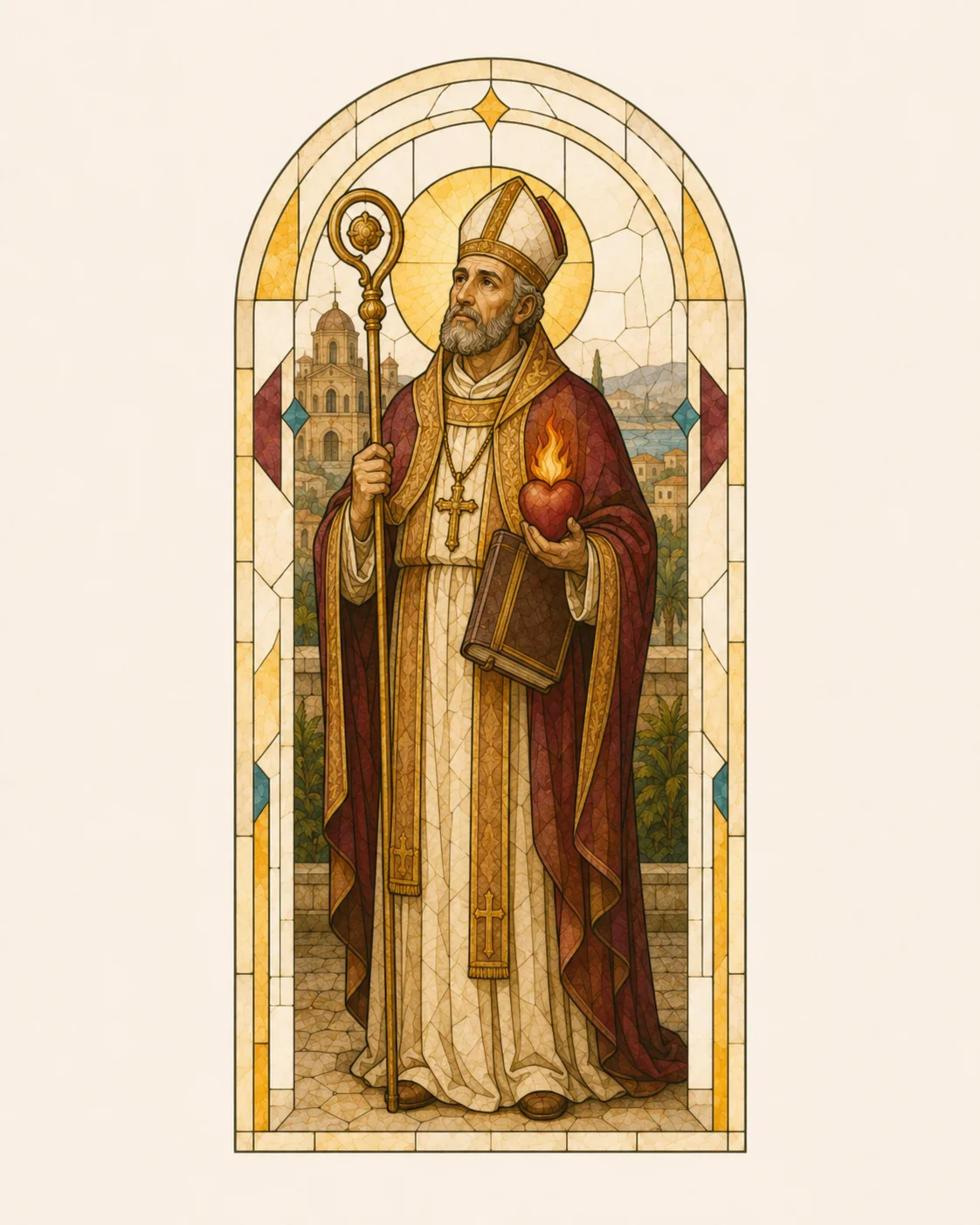
Portrait of St Augustine of Hippo

St Augustine of Hippo

Saint5th century · Feast August 28

A restless seeker who found Christ after years of intellectual and moral struggle, St Augustine became a bishop, pastor and writer whose teaching on grace, love and the human heart profoundly shaped Western Christianity.

Bishop
Algeria
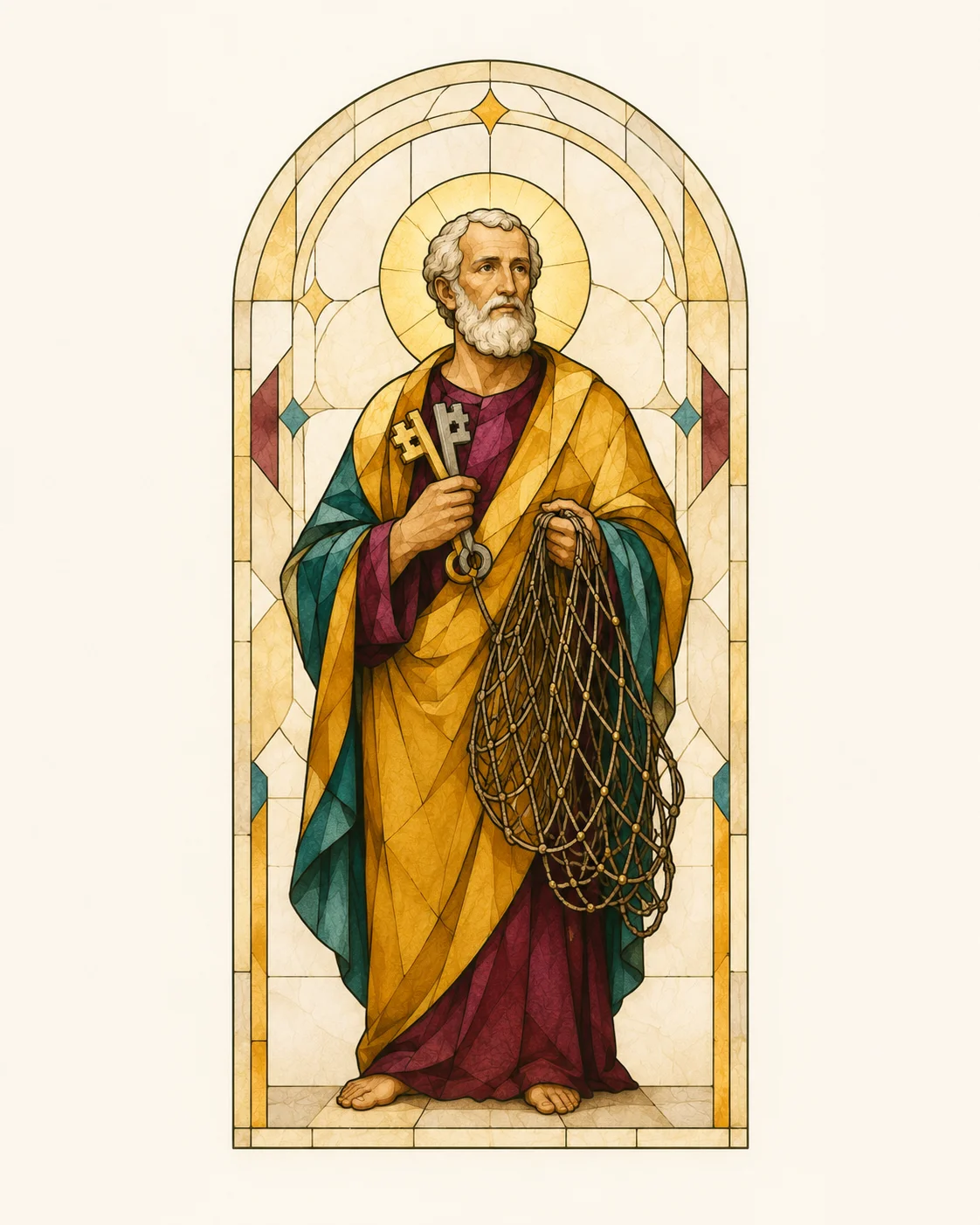
St Peter the Apostle holding the keys of the Kingdom beside a fishing net and rooster, with the city of Rome represented behind him

St Peter the Apostle

Saint1st century · Feast June 29

St Peter was a married Galilean fisherman whom Jesus called as an Apostle and entrusted with a distinctive pastoral mission; forgiven after denying Christ, he led the early Church and was martyred in Rome.

Apostle
Roman Empire