St Andrew the Apostle
Saint1st century · Feast November 30
A fisherman and early disciple remembered for bringing other people to meet Jesus.
Apostle
Israel
Saint1st century · Feast June 29
Also known as Simon Peter, Simon, Cephas, Peter, Simeon, Kephas, Simon bar-Jona
St Peter was a married Galilean fisherman whom Jesus called as an Apostle and entrusted with a distinctive pastoral mission; forgiven after denying Christ, he led the early Church and was martyred in Rome.
Lord Jesus Christ, you called Simon from his nets, gave him the name Peter and entrusted him with the care of your flock. When fear causes me to falter, teach me to reach for your saving hand. When I fail, give me the honesty to repent, the humility to accept correction and the faith to receive your mercy. Through the intercession of St Peter, strengthen me to confess you with courage, welcome those whom you call and serve faithfully the people entrusted to me. Keep me close to you through every trial, and lead me at last into the everlasting communion of your Church in heaven. Amen.
St Peter was originally named Simon. The Gospel of John identifies Bethsaida as the town of Simon and his brother, St Andrew, while the Synoptic Gospels place his family home in Capernaum beside the Sea of Galilee. Simon worked as a fisherman, an occupation he shared with Andrew and with the sons of Zebedee, James and John. The Gospels also recount Jesus healing Simon’s mother-in-law, establishing that Simon was married, although Scripture does not preserve the name of his wife or describe their married life in detail.
The Gospel accounts present Simon’s call from complementary perspectives. In John’s Gospel, Andrew brings Simon to Jesus after first recognising Jesus as the Messiah. Jesus looks at Simon and gives him the Aramaic name Cephas, meaning “rock,” rendered as Petros in Greek and Peter in English. In the Synoptic Gospels, Jesus calls Simon and Andrew from their fishing work and promises to make them fishers of people. Luke connects this call with a miraculous catch of fish. Overwhelmed by what he witnesses, Simon acknowledges his sinfulness, but Jesus tells him not to be afraid.
Peter became one of the Twelve Apostles and emerged as their most frequent spokesman. Together with St James the Greater and St John the Apostle, he belonged to the smaller group permitted to witness events including the raising of Jairus’s daughter, the Transfiguration and Jesus’ agony in Gethsemane. The Gospels portray Peter vividly: generous, direct, courageous and loyal, but also impulsive, overconfident and vulnerable to fear.
These qualities appear when Peter sees Jesus walking upon the water. He asks Jesus to command him to come across the water and initially steps out of the boat in faith. When he becomes frightened by the wind, however, he begins to sink and cries out to Jesus for help. The episode captures an important pattern in Peter’s life: genuine faith followed by fear, and fear answered by Christ’s saving hand.
At Caesarea Philippi, Peter speaks for the Apostles by confessing that Jesus is the Messiah and the Son of the living God. Jesus declares Simon blessed, calls him Peter, the rock upon which he will build his Church, and promises him the keys of the Kingdom of Heaven with the authority to bind and loose. Catholic teaching recognises here a distinctive pastoral responsibility entrusted to Peter within the apostolic college.
Peter nevertheless remained a disciple in need of conversion. Immediately after confessing Jesus as Messiah, he resisted Christ’s revelation that the Messiah must suffer and die. Jesus rebuked him for thinking according to human expectations rather than God’s plan. Peter wanted to follow a victorious Messiah but had not yet understood that Christ’s victory would be accomplished through self-giving love, suffering and the Cross.
During the Last Supper, Jesus told Peter that Satan had sought to test the disciples but that he had prayed specifically for Peter’s faith. Jesus commanded him, once he had turned back, to strengthen his brothers. Peter insisted that he was prepared to go to prison and death, but Jesus warned that he would deny him three times before the rooster crowed.
When Jesus was arrested, Peter reacted by drawing a sword and cutting off the ear of the high priest’s servant. Later, while Jesus was being questioned, fear overcame him. Three times Peter denied knowing Jesus. When the rooster crowed, Peter recognised what he had done and wept bitterly. The Gospels do not excuse his denial, but neither do they allow his failure to become the final word about his vocation.
Following the Resurrection, Peter was among the first Apostles to investigate the empty tomb. Early Christian testimony also identifies him as one of the first witnesses to whom the risen Christ appeared. John’s Gospel describes a decisive encounter beside the Sea of Tiberias. Three times Jesus asked Peter whether he loved him, and three times Peter professed his love. Jesus responded by entrusting Peter with the care of his flock: feeding his lambs, tending his sheep and feeding his sheep. The threefold profession does not erase the seriousness of Peter’s denial; it reveals Christ restoring him through love, repentance and renewed responsibility.
After the Ascension, Peter became the leading public spokesman of the Jerusalem Church. He guided the discernment through which St Matthias was chosen to replace Judas. At Pentecost, filled with the Holy Spirit, Peter proclaimed the death and Resurrection of Jesus and called his listeners to repentance and Baptism. Acts describes him healing a man unable to walk, preaching despite official threats and continuing to bear witness after imprisonment.
Peter also played a central role as the Church recognised the universality of the Gospel. While praying at Joppa, he received a vision challenging the ritual distinctions that had prevented him from entering a Gentile home. He then visited the Roman centurion Cornelius. When the Holy Spirit descended upon Cornelius and his household, Peter ordered that they be baptised. He later defended this decision before Jewish believers in Jerusalem, explaining that God had granted the Gentiles the same gift.
Herod Agrippa I later imprisoned Peter, intending to bring him before the people, but Acts recounts that an angel freed him during the night. Peter subsequently appeared at the Council of Jerusalem, where he recalled the conversion of Cornelius and argued that Gentile believers should not be burdened with requirements that neither Jewish Christians nor their ancestors had been able to bear.
Peter was not portrayed as flawless even after Pentecost. In his Letter to the Galatians, St Paul recounts opposing Cephas at Antioch because Peter had withdrawn from table fellowship with Gentile Christians under pressure from other believers. The episode shows both the tensions experienced by the earliest Church and the willingness of Scripture to preserve conflict among its leaders rather than presenting them as incapable of error.
The New Testament contains two canonical letters bearing Peter’s name. First Peter offers encouragement to Christian communities enduring suffering and calls their leaders to shepherd God’s flock without domination. Second Peter defends apostolic testimony and recalls the Transfiguration. The Church receives both letters as canonical Scripture, while scholars continue to discuss their precise processes of composition, including the possible use of secretaries, collaborators or later Petrine tradition.
Ancient Christian testimony places Peter’s final witness in Rome. First Clement, written from the Roman Church near the end of the first century, remembers Peter as an example of faithful endurance unto death. Later Christian writers more explicitly associate his martyrdom with Rome during the reign of Emperor Nero. His death is therefore responsibly dated to approximately AD 64–67.
A longstanding tradition says that Peter was crucified. A later tradition, associated particularly with the apocryphal Acts of Peter, describes him as being crucified upside down. This detail should be presented as tradition rather than as a fact recorded in the New Testament or the earliest surviving testimony.
Christians venerated a burial place associated with Peter on Vatican Hill from an early period. The present St Peter’s Basilica stands above the Vatican necropolis and the place traditionally honoured as his tomb. Twentieth-century excavations uncovered an important early shrine and human remains that Pope Paul VI judged could be identified with Peter’s relics in a convincing manner, although the archaeological evidence should not be exaggerated beyond that careful claim.
The Catholic Church recognises Peter as the first Bishop of Rome and therefore as the first pope. The developed title “pope” was not used for Peter during his lifetime, but it expresses the Catholic understanding that the pastoral mission entrusted to him continues through his successors as Bishops of Rome. Peter’s enduring witness is therefore not that of a naturally flawless leader, but of a disciple whose faith, failure, repentance, love and eventual martyrdom were all transformed by the grace of Christ.
Peter lived during the early first century, when Galilee and Judea existed within the political world of the Roman Empire. Galilee was governed for much of Jesus’ ministry by Herod Antipas, while Judea was administered by Roman prefects including Pontius Pilate. Bethsaida was associated with the territory governed by Philip the tetrarch, although it belonged to the wider Galilean setting of Peter’s life and work.
Fishing was an important part of the economy surrounding the Sea of Galilee. Fishermen worked within family and commercial partnerships and were affected by taxes, tolls and the regional market. Peter’s occupation therefore involved physical labour, practical skill, cooperation and economic uncertainty.
Peter and the other first disciples were Jewish. They lived within the religious world of Second Temple Judaism, worshipped the God of Israel and understood Jesus through Israel’s Scriptures and hopes. Jewish expectations concerning the Messiah were diverse. Peter’s resistance to Jesus’ suffering shows how difficult it was for him to understand that the Messiah’s victory would come through the Cross rather than political force.
After the Resurrection, the community of Jesus’ disciples remained rooted in Jewish prayer and Scripture while proclaiming that Jesus was the risen Messiah. The reception of Gentiles created difficult theological and communal questions. Peter’s encounter with Cornelius and his intervention at the Council of Jerusalem helped the Church recognise that Gentiles were receiving the Holy Spirit without first becoming Jews.
Rome was the imperial capital and contained a Christian community before Peter’s arrival. Following the Great Fire of Rome in AD 64, Emperor Nero blamed and brutally punished Christians. The Roman historian Tacitus independently records this persecution. Ancient Christian tradition places Peter’s martyrdom within this Neronian setting.
St Peter’s spirituality is defined by a movement from natural confidence to dependence upon Christ’s grace. Peter loved Jesus sincerely, but enthusiasm alone could not make him faithful: he stepped onto the water and then sank, confessed Christ and then resisted the Cross, promised courage and then denied his Lord. His holiness grew through being called, corrected, forgiven and sent again. Prayer, repentance, trust in Christ, bold proclamation, pastoral care and willingness to accept responsibility all shaped his discipleship. Peter’s authority was ultimately a commission to feed Christ’s flock, strengthen his brothers and preserve communion, not permission to dominate others.
St Peter is especially relevant to people who fear that failure has permanently disqualified them from serving God. His story does not minimise wrongdoing or remove its consequences. It shows instead that honest repentance, acceptance of correction and trust in Christ’s mercy can transform failure into humility and compassionate service.
Peter also speaks to people carrying responsibility for families, churches, teams or communities. He shows that leadership is not the performance of perfection. Christian leadership requires fidelity to truth, willingness to acknowledge mistakes, courage to defend others, openness to correction and perseverance in caring for those entrusted to us.
His encounter with Cornelius also challenges believers to recognise when inherited assumptions or social pressure prevent them from welcoming people whom God is calling. Peter’s growth demonstrates that mature faith can require both holding firmly to Christ and allowing God to correct the limits of our understanding.
People turn to St Peter the Apostle in matters of:
c. AD 27–30
Jesus calls Simon from his fishing work and gives him the name Peter.
c. AD 29–30
Peter confesses at Caesarea Philippi that Jesus is the Messiah and the Son of the living God.
c. AD 30
Peter witnesses the Transfiguration alongside St James the Greater and St John the Apostle.
c. AD 30
Peter denies Jesus three times during the Passion and afterwards weeps bitterly.
c. AD 30
The risen Jesus receives Peter’s threefold profession of love and entrusts him with the care of his flock.
c. AD 30–33
Peter preaches at Pentecost and becomes the leading public spokesman of the Jerusalem Church.
c. AD 30–40
Peter receives the vision at Joppa and baptises Cornelius and his Gentile household.
c. AD 44
Herod Agrippa I imprisons Peter, who is freed during the night according to Acts 12.
c. AD 49
Peter speaks at the Council of Jerusalem concerning the reception of Gentile believers.
c. AD 49–50
St Paul opposes Peter at Antioch over his withdrawal from table fellowship with Gentile Christians.
c. AD 64–67
Peter is martyred in Rome during Nero’s reign and buried according to ancient tradition on Vatican Hill.
June 29 · Solemnity · Global
Saints Peter and Paul, Apostles, Apostle and Martyr
Solemnity in the General Roman Calendar
Celebrated together with St Paul the Apostle
February 20 · Feast · Global
The Chair of Saint Peter the Apostle, Apostle and Pope
Feast in the General Roman Calendar
November 18 · Optional memorial · Global
The Dedication of the Basilicas of Saints Peter and Paul, Apostles
Optional memorial in the General Roman Calendar
Celebrated together with St Paul the Apostle
Source-quality status: verified
Saint1st century · Feast November 30
A fisherman and early disciple remembered for bringing other people to meet Jesus.
Saint1st century · Feast August 24
An apostle traditionally identified with Nathanael, praised by Jesus for honesty and willingness to reconsider.
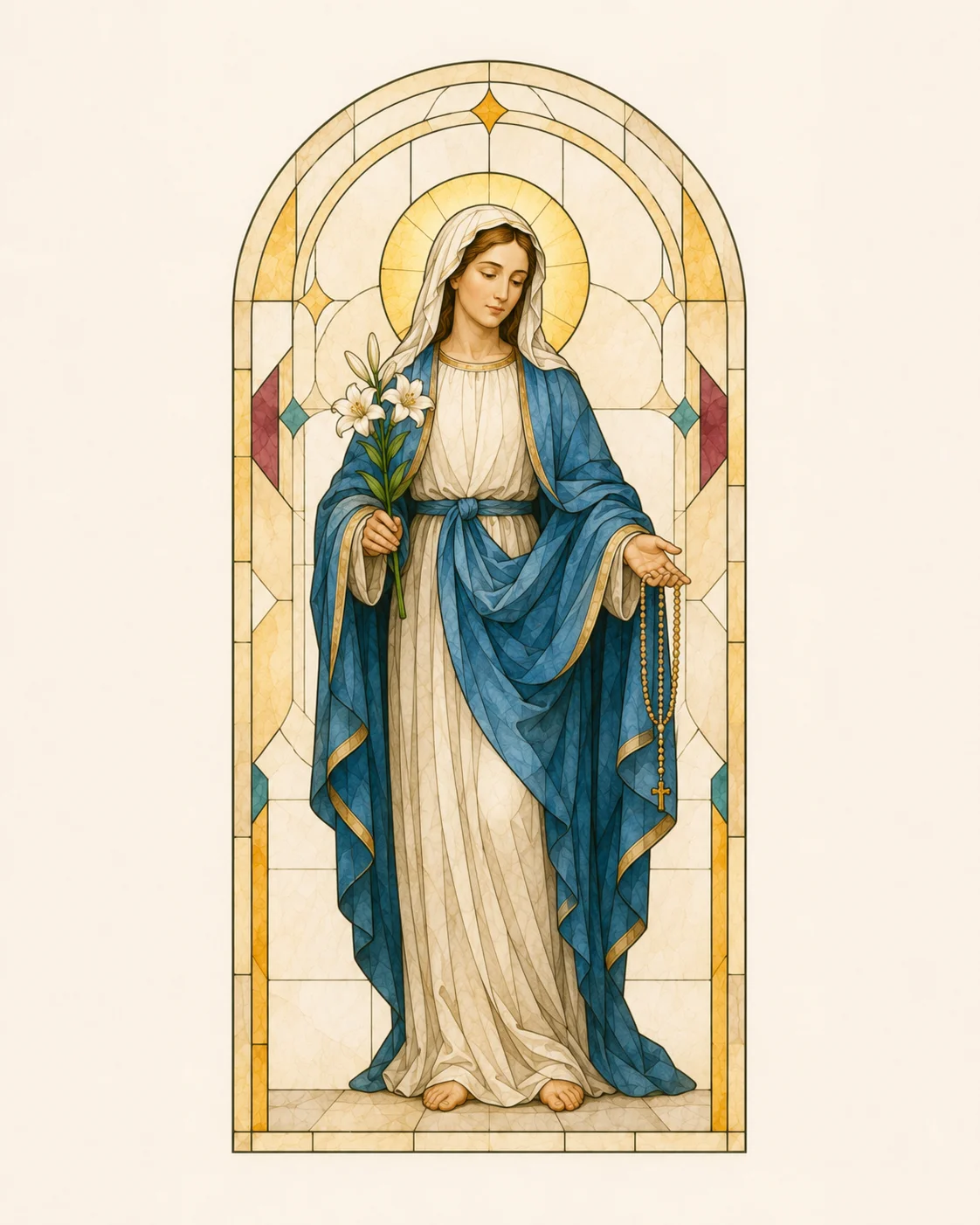
Saint1st century · Feast January 1
The Jewish woman of Nazareth whose free response to God opened her life to the Incarnation, the Blessed Virgin Mary became the Mother of Jesus, his faithful disciple and the motherly model of the Church.
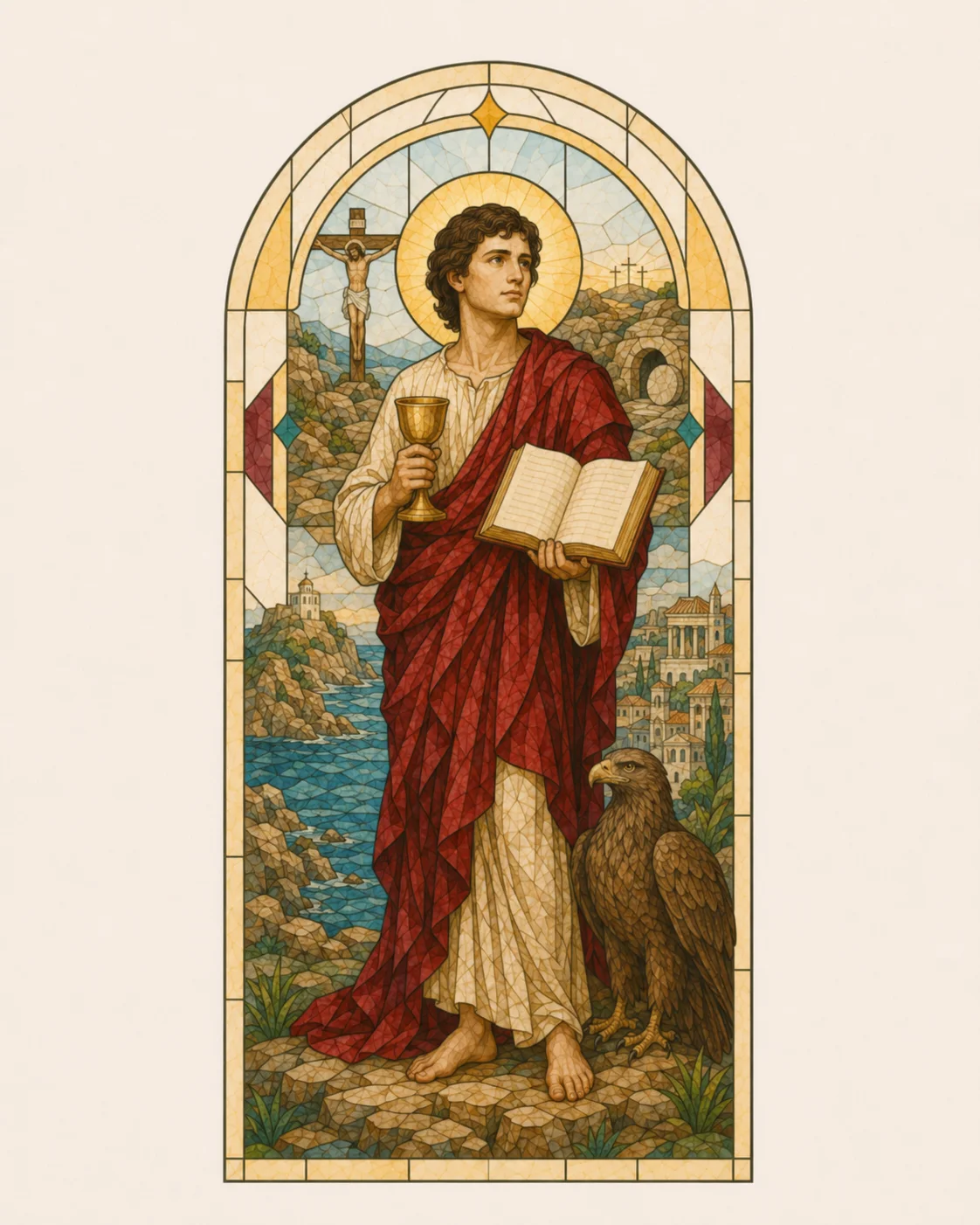
Saint1st century · Feast December 27
St John the Apostle was a Galilean fisherman, one of the Twelve and a leading witness to Christ whose life and Johannine tradition reveal the transforming power of friendship with Jesus, contemplation, courageous testimony and self-giving love.
Saint1st century · Feast September 21
A tax collector called away from a compromised profession to follow Jesus and become an apostle.
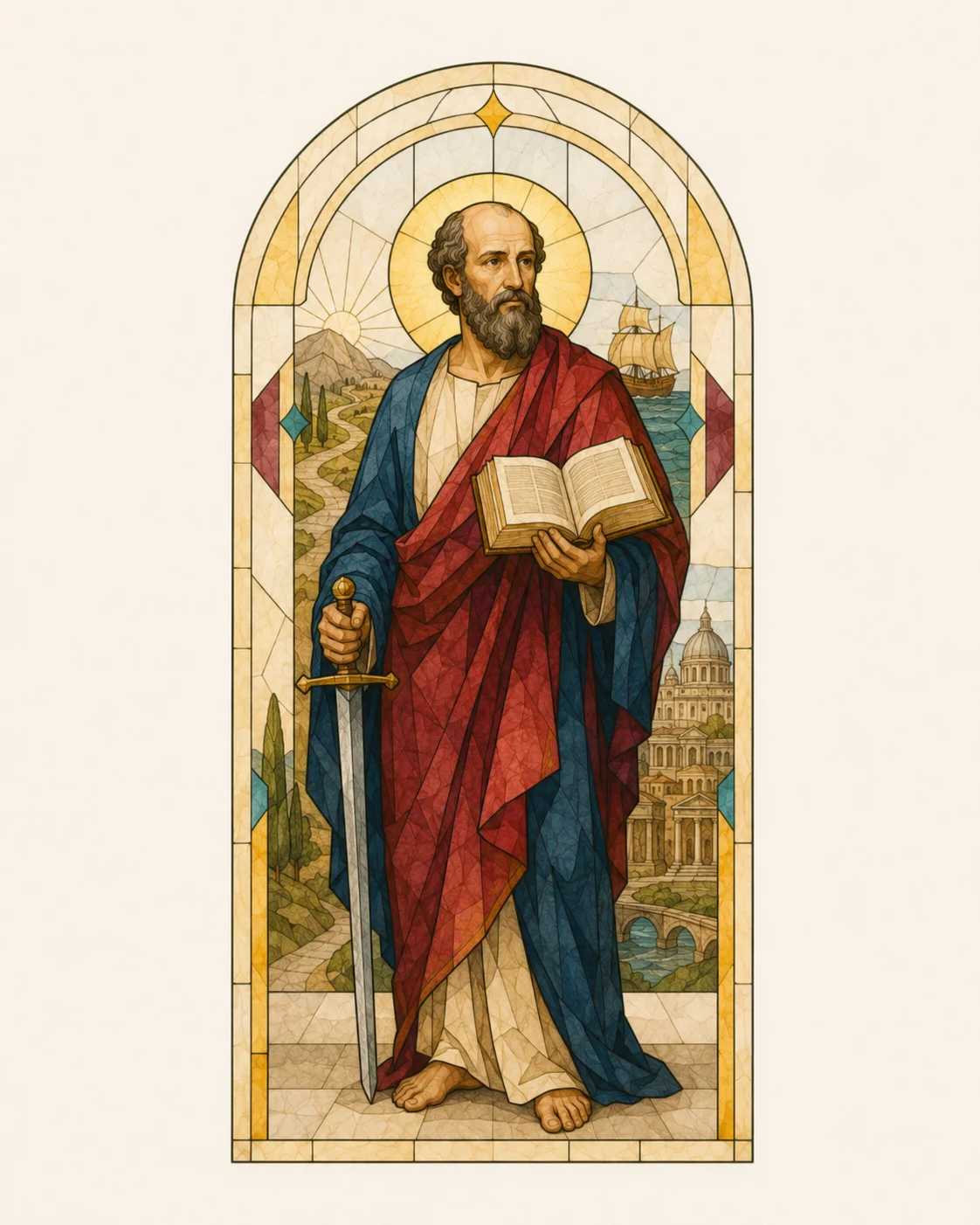
Saint1st century · Feast June 29
St Paul was a Jewish Pharisee and Roman citizen whose encounter with the risen Christ transformed him from a persecutor of the Church into the Apostle to the Gentiles, missionary, letter writer and martyr in Rome.
Saint1st century · Feast May 3
An apostle who invited Nathanael to meet Jesus and repeatedly brought practical questions directly to Christ.
Saint1st century · Feast October 28
An apostle remembered by the title Zealot, offering a model of intense conviction placed under the discipline of Christ.
Saint1st century · Feast July 3
An apostle remembered for honest doubt, direct encounter with the risen Christ and ancient missionary tradition in India.