St John the Apostle was one of the Twelve chosen by Jesus and one of the most prominent witnesses in the earliest Church. The New Testament identifies him as the son of Zebedee and the brother of St James. He began his life as a Jewish fisherman in Galilee and became an Apostle, missionary and leader of the Church. Catholic tradition also identifies him with the disciple whom Jesus loved and associates him with the Gospel of John, the three Johannine letters and the Book of Revelation.
John and James worked with their father beside the Sea of Galilee. Mark records that Zebedee’s fishing business employed hired workers, suggesting an established family enterprise rather than complete destitution. Jesus called the brothers while they were mending their nets, and they left their father and the boat to follow him. Scripture does not name their birthplace. Bethsaida and Capernaum are sometimes proposed because of their fishing activity and connections around the lake, but neither should be entered as John’s documented place of birth.
The precise identity of John’s mother is also not stated directly. Matthew refers to the mother of the sons of Zebedee, while Mark names a woman called Salome among those who followed Jesus and witnessed the Crucifixion. Comparing the accounts led longstanding tradition to identify Salome as the mother of James and John, but the Gospels do not make that identification explicitly.
Jesus gave James and John the name Boanerges, meaning “sons of thunder.” Their zeal was genuine but not yet purified. John once attempted to prevent a man from casting out demons in Jesus’ name because the man was not following with their group. On another occasion, after a Samaritan village refused to receive Jesus, James and John asked whether they should call down fire from heaven. Jesus rebuked them. These incidents reveal possessiveness, anger and a desire to defend Jesus through coercive power—attitudes that his teaching would have to transform.
John nevertheless became part of the smaller group whom Jesus brought into several decisive moments. Together with Peter and James, he entered the house where Jesus restored the daughter of Jairus to life. The three accompanied Jesus at the Transfiguration and saw his glory revealed upon the mountain. They were also taken farther into the Garden of Gethsemane when Jesus prayed before his arrest. Their closeness did not mean that they understood everything immediately. They repeatedly encountered mysteries that exceeded their expectations.
John and James also sought positions of honour in Jesus’ Kingdom. Mark presents the brothers themselves making the request, while Matthew presents their mother approaching Jesus on their behalf. Jesus responded by asking whether they could drink the cup that he would drink. He then taught the Apostles that greatness in his Kingdom is found not in dominating others but in serving them. The Son of Man had come to serve and to give his life for many. John’s later association with self-giving love cannot be separated from this earlier need to have ambition and rivalry converted.
Luke records that Jesus sent Peter and John to prepare the Passover meal. Catholic tradition identifies John with the disciple whom Jesus loved who reclined close to Jesus during the supper. The Fourth Gospel deliberately leaves this disciple unnamed. It presents him not primarily through status or office but through his relationship with Jesus and his role as a trustworthy witness.
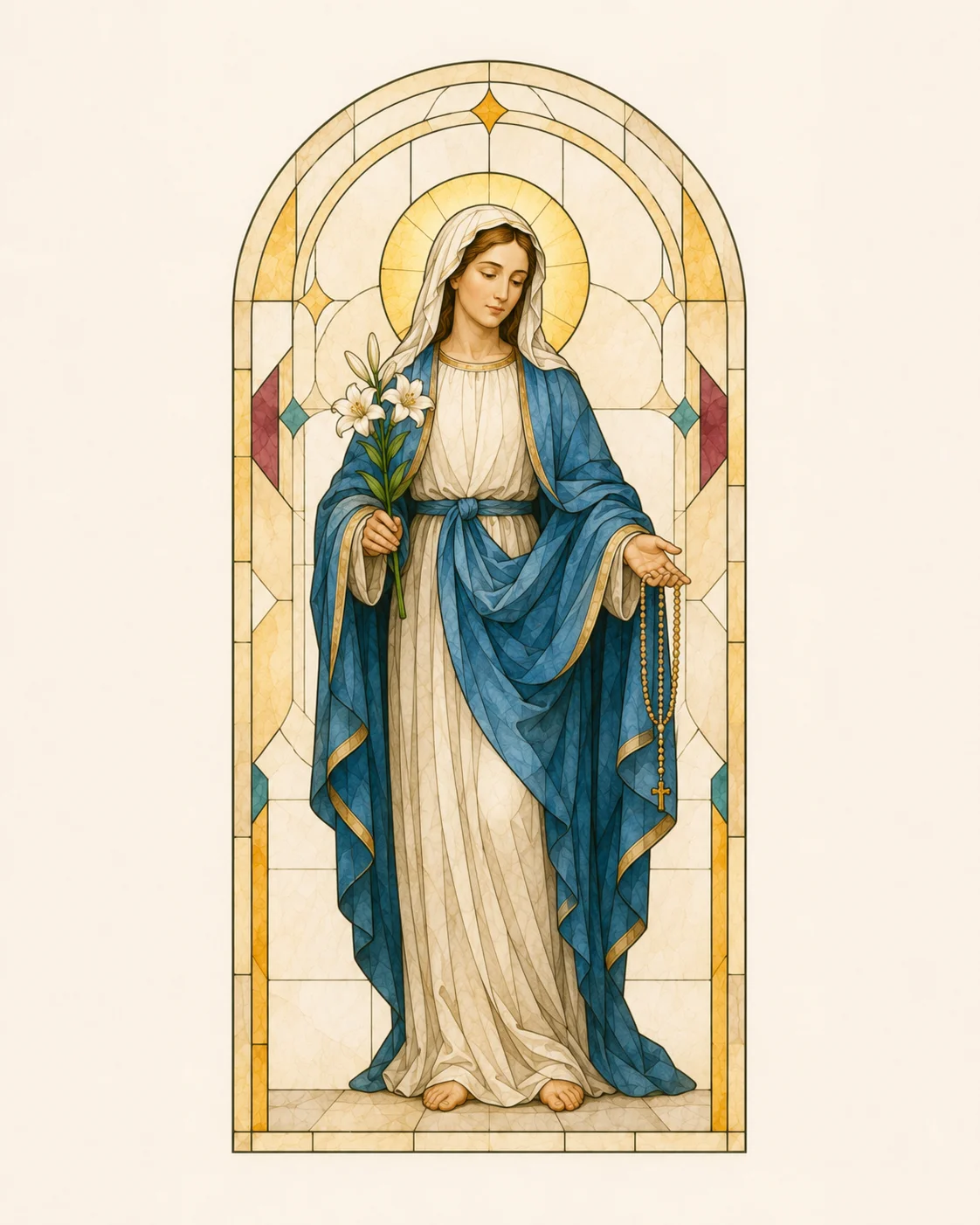
According to this traditional identification, John remained beside the Blessed Virgin Mary near the Cross after most of the male disciples had fled. Jesus addressed Mary and the beloved disciple, entrusting them to one another as mother and son. The disciple then received Mary into his own household. Catholic reflection sees this moment both as a real act of care for Mary and as a sign of her maternal relationship with the family of Christ’s disciples. Scripture does not narrate the details of Mary and John’s subsequent household or establish where they later lived together.
The beloved disciple also appears in the account of the empty tomb. After Mary Magdalene reported that the stone had been removed, Peter and the other disciple ran to the tomb. The beloved disciple arrived first but allowed Peter to enter before him. He then entered, saw and believed, although the disciples did not yet fully understand the Scripture concerning the Resurrection.
John 21 places the sons of Zebedee among the disciples who returned to fishing in Galilee and encountered the risen Jesus beside the lake. The beloved disciple was the first to recognise Jesus standing upon the shore and told Peter, “It is the Lord.” The chapter then addresses a rumour that this disciple would remain alive until Jesus returned. The Gospel explicitly corrects the rumour: Jesus had not said that the disciple would never die. This correction is important because John’s eventual old age inspired speculation about supernatural immunity from death.
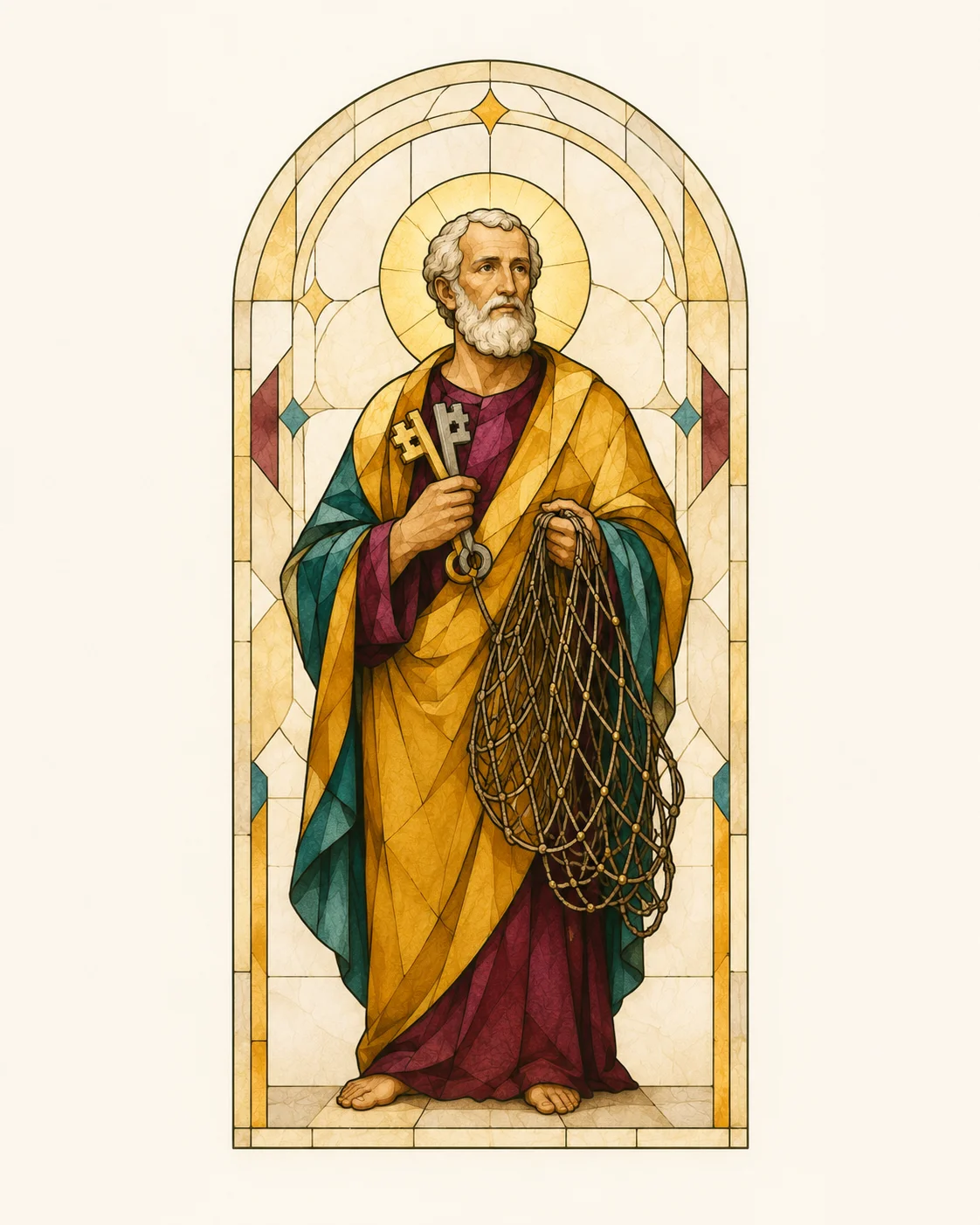
After Christ’s Ascension, John belonged to the apostolic community gathered in Jerusalem. Acts frequently presents him beside Peter. They went together to the Temple, where a man unable to walk from birth was healed in the name of Jesus. The two Apostles were arrested and brought before the religious authorities. Although the council regarded them as uneducated ordinary men, it recognised that they had been companions of Jesus.
When ordered to stop teaching in Jesus’ name, Peter and John declared that they could not remain silent about what they had seen and heard. Their boldness did not resemble the earlier desire to call fire upon opponents. They bore witness without commanding violence against those who rejected them. After their release, they returned to the Christian community and joined its prayer for courage.
Peter and John were later sent from Jerusalem to Samaria after people there accepted the Gospel. They prayed for the new believers to receive the Holy Spirit. John’s participation carries particular significance because he had previously wanted judgement to fall upon a Samaritan village. He now served the growth of the Church among Samaritans and welcomed them into the same Spirit-filled community.
St Paul later named John, together with Peter and James the brother of the Lord, as one of the “pillars” of the Jerusalem Church. They recognised Paul’s mission among the Gentiles and asked that concern for the poor remain part of that mission. The New Testament gives no continuous account of John’s later travels. His brother James was executed by Herod Agrippa I around AD 44, but Acts does not describe John’s response or later movements.
Ancient Christian tradition strongly associates John with Ephesus and the Churches of Asia. St Irenaeus, writing in the second century, stated that John, the disciple who had rested near the Lord at supper, published the Gospel while living at Ephesus. Irenaeus also reported that John remained there until the reign of Emperor Trajan. These claims provide important early testimony, although they were written several generations after the events.
The Catholic tradition identifies John the Apostle with the beloved disciple whose testimony stands behind the Fourth Gospel. The Gospel itself says that the beloved disciple testified to its contents and that his testimony is true. It does not, however, name him as John son of Zebedee. The final literary form of the Gospel appears to reflect a developed Johannine tradition and may include the work of disciples or editors who preserved and arranged the apostolic witness. Recognising such a process does not diminish the Gospel’s inspiration, canonicity or apostolic foundation.
The Gospel traditionally bearing John’s name presents Jesus as the eternal Word who was with God, was God and became flesh. Through signs, conversations and extended teaching, it explores themes of life, light, truth, glory, witness, belief and communion with the Father. Its purpose is that readers may believe that Jesus is the Messiah and Son of God and, through believing, have life in his name.
Three New Testament letters also bear John’s name or belong to the Johannine tradition. First John insists that genuine faith in the incarnate Christ cannot be separated from moral truth and concrete love. The author does not speak about love as a vague feeling. God’s love becomes visible in the gift of his Son, while the believer’s love becomes visible through obedience, truth and care for people in need. Second and Third John address truth, hospitality, false teaching and conflict within Christian communities.
The Book of Revelation identifies its author simply as John and places him on the island of Patmos because of the word of God and the testimony of Jesus. Several early Fathers identified this John with the Apostle, while other ancient Christian writers questioned that conclusion. Differences in language and style between Revelation and the Gospel have continued to prompt debate. The Church receives Revelation as inspired Scripture regardless of whether every stage of its composition came directly from John the Apostle.
Within the traditional identification, John’s Patmos visions complete the portrait of the Apostle as a witness of hope. Revelation was written for Christians facing pressure, persecution and compromise. Its symbolic visions proclaim that the slain and risen Lamb remains victorious and that human history ultimately belongs to God. It should not be reduced to a timetable of modern disasters or used to fuel conspiracy theories.
Later traditions added dramatic episodes to John’s life. Tertullian reported that John survived being plunged into boiling oil before being exiled. A former Roman observance, St John before the Latin Gate, commemorated this tradition on 6 May but is no longer part of the General Roman Calendar. The familiar image of John holding a chalice containing a serpent comes from a later story that he blessed and safely drank poisoned wine. These stories shaped his iconography but are not recorded in Scripture and cannot be treated as established biography.
Ancient tradition holds that John eventually died naturally at an advanced age in Ephesus during the reign of Trajan. A major basilica was later constructed above the site venerated as his tomb. Neither Scripture nor surviving contemporary documentation supplies an exact date or proves the identity of physical remains connected with the site.
John’s Christian witness is not a story of effortless gentleness. The son of thunder who struggled with rivalry, anger and exclusiveness was formed into an Apostle whose tradition speaks insistently about truth, communion and self-giving love. His contemplation did not remove him from responsibility. It enabled him to recognise Christ, care for others, endure opposition and help the Church remain faithful across a long lifetime.