St Joseph
Saint1st century · Feast March 19
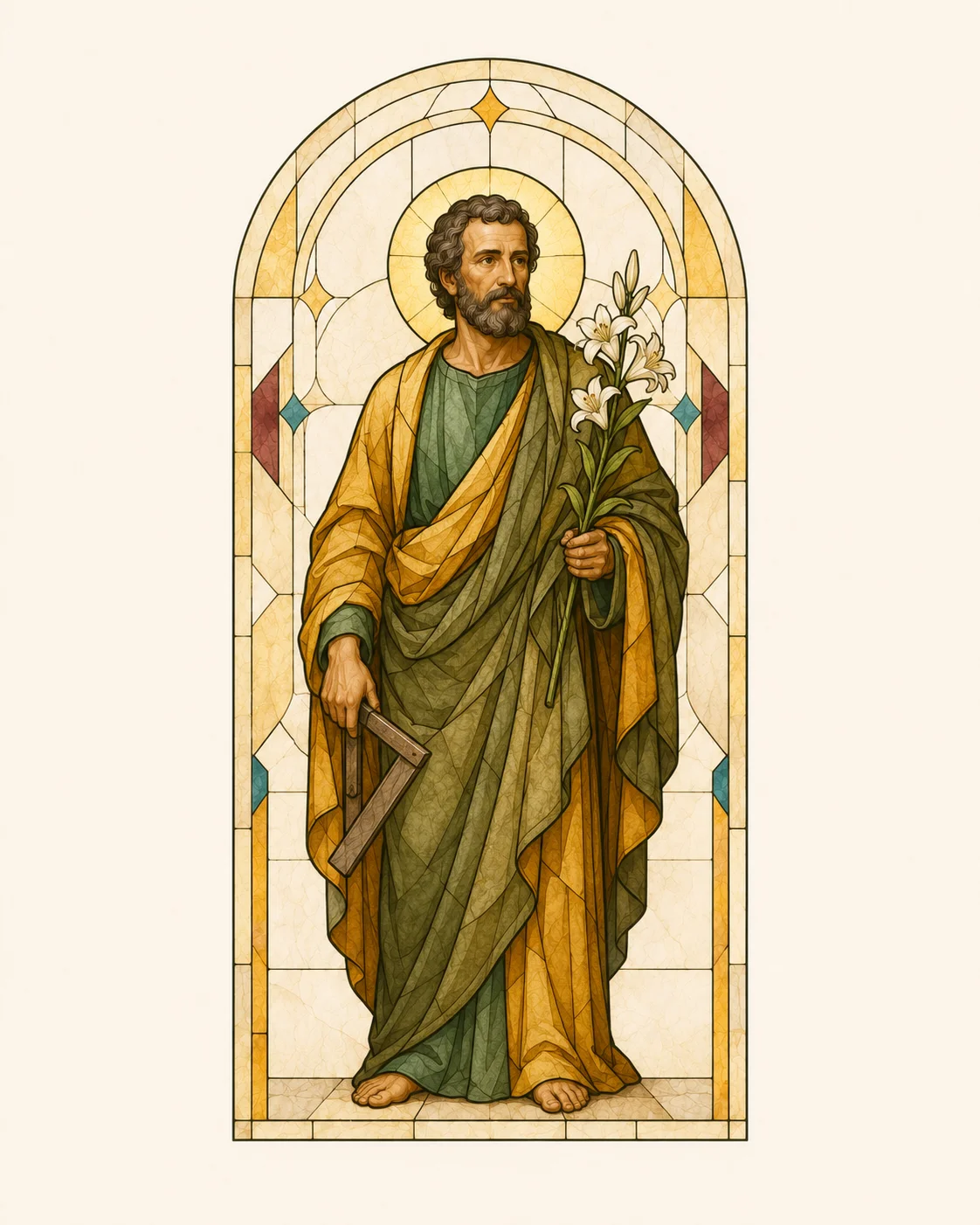
The just and faithful husband of Mary and earthly guardian of Jesus, St Joseph answered God’s call through courageous obedience, humble work and steadfast care for his family.
Saint1st century · Feast January 1
Also known as Mary, Mary of Nazareth, Virgin Mary, The Virgin Mary, Holy Mary, Mother of Jesus, Mother of God, Theotokos, Our Lady, Blessed Mother, Madonna, Miriam of Nazareth, Panagia, Holy Theotokos
The Jewish woman of Nazareth whose free response to God opened her life to the Incarnation, the Blessed Virgin Mary became the Mother of Jesus, his faithful disciple and the motherly model of the Church.
Mary was a Jewish woman associated with Nazareth in Galilee. The New Testament does not record her birthplace, birthday, age, physical appearance or the names of her parents. Later Christian traditions name her parents Joachim and Anne, but those names come from early writings outside the canonical Scriptures and should not be presented as details recorded in the Gospels. Mary was betrothed to Joseph, a man of the house of David. Luke’s Gospel begins its account of her public role when the angel Gabriel announces that she will conceive and bear a son who will be called Jesus, Son of the Most High. Mary asks how this will happen and is told that the Holy Spirit will come upon her and the power of the Most High will overshadow her. Her response is neither mindless submission nor passive resignation. She receives a vocation whose full consequences she cannot yet see and freely places herself at God’s service: “Behold, I am the handmaid of the Lord.” Christian tradition calls this response her fiat, from the Latin expression meaning “let it be done.” Through the Holy Spirit, the eternal Son of God takes human nature in Mary’s womb. Because the child she conceives is truly the divine Son, the Church calls Mary Theotokos, Mother of God. The title refers to the identity of Jesus Christ: Mary is mother of the person who is God the Son made human. She is not the source of his divine nature and is not herself divine. After the Annunciation, Mary travels to the hill country of Judah to assist her relative Elizabeth, who is expecting John the Baptist. Elizabeth greets her as blessed among women and as the mother of her Lord. Mary responds with the Magnificat, praising God for looking upon her lowliness, showing mercy, scattering the proud, lifting the lowly and remembering the promises made to Israel. The Magnificat reveals that Mary’s spirituality is not private sentiment detached from the suffering of the world. Her praise announces God’s reversal of pride, oppression and false security. She identifies herself with the lowly and sees what God has done for her within the larger history of God’s mercy towards Israel. Matthew records that Joseph learns in a dream that Mary’s child has been conceived through the Holy Spirit and takes her into his home. Luke records Mary travelling with Joseph to Bethlehem, where Jesus is born. She wraps him in swaddling clothes and lays him in a manger. When shepherds report the angelic announcement they have received, Mary keeps these events and reflects upon them in her heart. Mary and Joseph present Jesus in the Temple according to the Law. Simeon recognises the child as God’s salvation and tells Mary that a sword will pierce her own soul. The prophecy points towards the opposition Jesus will face and the suffering through which Mary’s discipleship will pass. Matthew recounts the Holy Family’s flight into Egypt after Joseph is warned that Herod intends to kill the child. Mary therefore belongs to a family that experiences political violence, hurried displacement, life in a foreign land and eventual return. After Herod’s death, the family settles in Nazareth. Luke next presents Mary when Jesus is twelve years old. After a Passover pilgrimage to Jerusalem, Mary and Joseph discover that he is not with their travelling group. They search for him anxiously for three days and find him in the Temple. They do not fully understand his response, but Mary continues to keep these things in her heart. The Gospels offer few details about the years that follow. Mary shared the hidden family life of Nazareth in which Jesus grew in wisdom and maturity. Her holiness was lived for many years through ordinary family responsibilities, work, prayer and the gradual acceptance of a mystery she did not always immediately understand. At the wedding feast at Cana, Mary notices that the wine has run out and brings the need to Jesus. She does not draw attention towards herself. Her instruction to the servants summarises authentic Marian discipleship: “Do whatever he tells you.” Jesus performs his first sign, and his disciples begin to believe in him. During Jesus’ public ministry, the Gospels occasionally mention his mother and relatives seeking him. Jesus teaches that those who hear the word of God and act upon it are his true family. Catholic tradition does not understand this as rejecting Mary. She is already the foremost example of the person who hears God’s word, receives it in faith and puts it into practice. John places Mary beside the Cross when many others have fled. She cannot prevent her Son’s suffering, but she remains present. Jesus entrusts the beloved disciple to her and entrusts her to the disciple. The Church has long understood this scene as revealing a wider spiritual motherhood rooted in Mary’s union with Christ and her care for his disciples. Mary’s presence at the Cross does not make her an additional redeemer. Jesus Christ alone accomplishes redemption. Mary’s cooperation is creaturely, maternal and entirely dependent upon grace. She participates through faith, obedience, love and suffering, while every saving gift originates in Christ. The final explicit New Testament reference to Mary appears in Acts. After Jesus’ Ascension, she is gathered in prayer with the apostles, the women and Jesus’ relatives as the community awaits the Holy Spirit. The woman overshadowed by the Spirit at the Annunciation is therefore present with the praying Church before Pentecost. Scripture does not describe the remainder of Mary’s earthly life. It does not state when or where she died. Catholic teaching holds that when the course of her earthly life was completed, she was assumed body and soul into heavenly glory. The Church has not defined whether this occurred after death or without death. The Church also teaches that Mary was preserved from original sin from the first moment of her conception through a singular grace of God and in view of the merits of Jesus Christ. The Immaculate Conception does not refer to the virginal conception of Jesus. It refers to God’s grace in Mary from the beginning of her own existence. Mary’s perpetual virginity, divine motherhood, Immaculate Conception and Assumption are not independent honours detached from Jesus. Each protects or illuminates part of the mystery of Christ and the transformation that his grace can accomplish in a human person. Mary is also called Mother of the Church. Her motherhood of Jesus and her relationship with his disciples are inseparable. She is a member of the Church, redeemed by Christ, while also standing within it as its pre-eminent model of faith, hope, charity and complete openness to the Holy Spirit. Catholics venerate Mary but do not worship her. Adoration belongs to the Father, Son and Holy Spirit alone. Marian prayer asks for the intercession of a fellow member of Christ’s Body who has been uniquely united with him. Authentic devotion to Mary leads towards Jesus, Scripture, the sacraments, charity and the worship of God. Across cultures, Christians have represented Mary with different languages, clothing, features and artistic traditions. These images express the nearness of the Mother of Christ to many peoples, but none is an authenticated portrait. The historical Mary was a Jewish woman of first-century Galilee. Mary’s greatness is not merely that extraordinary things happened to her. Jesus himself teaches that blessedness belongs to those who hear God’s word and keep it. Mary’s entire life embodies this listening faith: she receives the word, carries Christ, serves others, asks questions, ponders what she does not understand, points people towards Jesus, remains beside the Cross and prays with the Church.
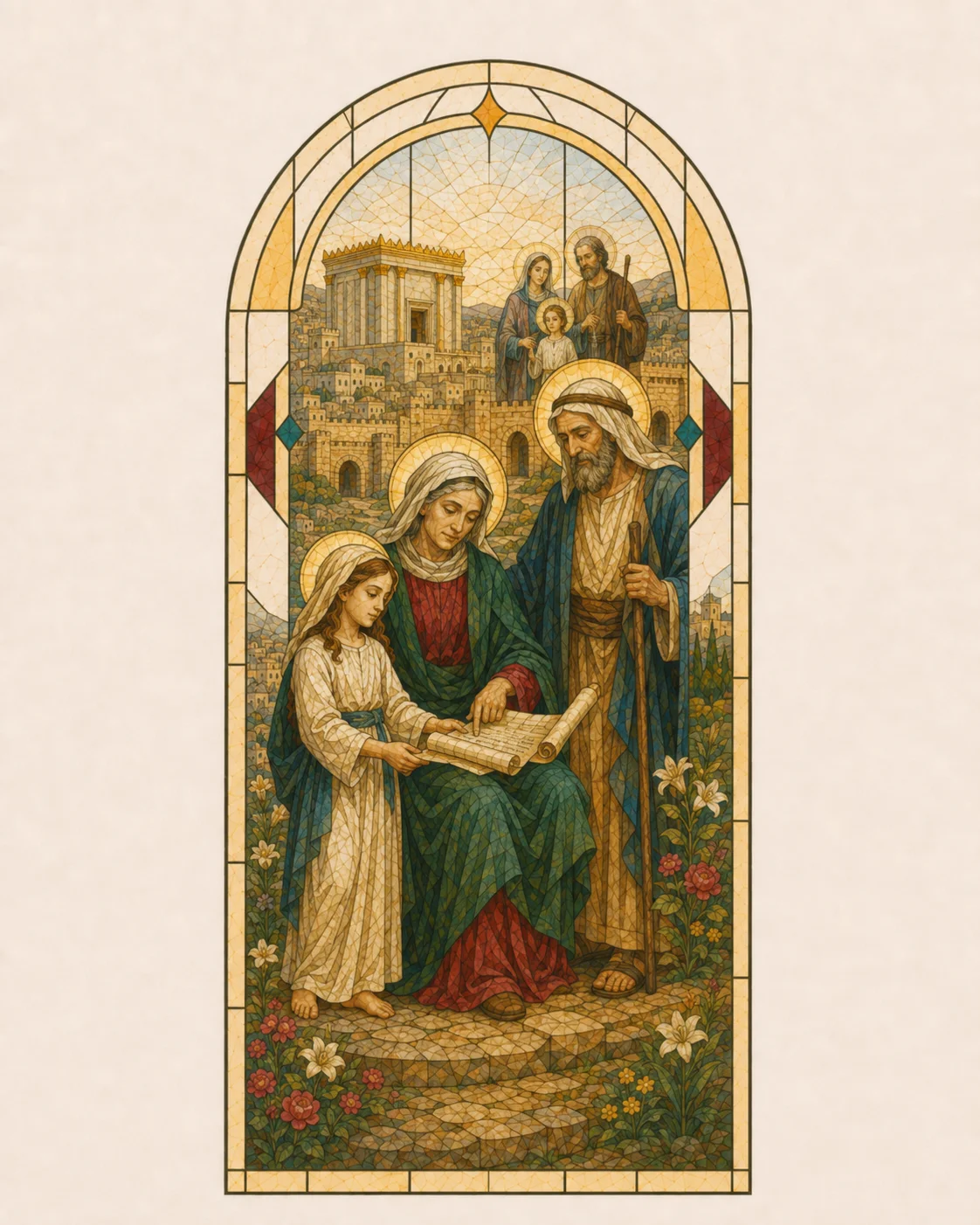
Mary lived as a Jewish woman in the Holy Land during the final years of the first century BC and the opening decades of the first century AD. Galilee and Judea existed under Roman imperial power and the rule of Herodian authorities. Her world was shaped by Israel’s Scriptures, covenant, festivals, family structures and expectation of God’s saving action. The language of the Magnificat draws deeply upon the prayer and prophetic traditions of Israel, especially the song of Hannah and the promises made to Abraham. Betrothal carried a binding social and legal significance greater than modern engagement. Mary’s pregnancy therefore placed her reputation and future in a vulnerable position. Matthew’s account emphasises Joseph’s intention to avoid exposing her publicly and the divine message that leads him to take her into his home. Travel between Nazareth, Bethlehem and Jerusalem could be physically difficult. Matthew’s account of the flight into Egypt places the Holy Family among people displaced by political violence and forced to rely upon uncertain protection beyond their home region. Jewish families travelled to Jerusalem for pilgrimage festivals, and Luke situates the family within this pattern. Mary’s presentation of Jesus and the later Passover journey belong within the religious life of Israel rather than outside it. The Gospels do not tell us whether Mary could read or write, exactly which languages she spoke or how old she was when Jesus was conceived. These details should not be invented merely because later art and devotional tradition frequently portray her as very young. Mary’s life also belongs to the earliest history of the Church. Acts places her among the disciples praying in Jerusalem before Pentecost. Later Christian reflection developed through Scripture, liturgy, the early councils and the Church Fathers, always in connection with the identity and saving work of Christ.
Listening faith; free and courageous surrender to God; contemplative pondering; Scripture-shaped prayer; the praise and justice of the Magnificat; humble service; maternal attentiveness; intercession that directs others towards Jesus; purity of heart; fidelity within ordinary family life; perseverance through uncertainty and grief; presence beside the Cross; prayer within the Church; and complete openness to the Holy Spirit.
The Blessed Virgin Mary speaks to people facing a call whose consequences they cannot fully predict. Her fiat shows that faith can involve questions, discernment and a genuinely free response rather than perfect knowledge of what comes next. She is especially meaningful to women navigating pregnancy, motherhood, family expectations and responsibilities that are both joyful and demanding. Her story should not be used to reduce women to one role, but it honours the bodily, emotional and spiritual significance of motherhood. Mary’s journey to Elizabeth shows that receiving a personal vocation does not turn a person inward. Her first response is to travel in service of another woman and to rejoice in what God is doing beyond herself. The Magnificat makes her relevant to people experiencing poverty, exclusion or unequal power. Mary praises a God who lifts the lowly and challenges the pride of those who trust in status and wealth. Marian devotion should therefore produce compassion, justice and solidarity rather than sentiment without action. The flight into Egypt makes her a companion for refugees, migrants, displaced families and parents trying to protect children from political violence. Her family knew hurried departure, insecurity and life away from home. Mary is meaningful to parents whose children’s lives or vocations they do not completely understand. She asks Jesus an honest question after finding him in the Temple and continues to ponder rather than pretending that everything is immediately clear. At Cana she models attentive intercession. She notices a need before it becomes a public humiliation, brings it to Jesus and tells others to follow him. She does not make herself the centre of the event. Our Lady of Sorrows speaks to parents watching a child suffer, families facing serious illness and people who feel powerless beside someone they love. Mary’s presence at the Cross does not remove suffering, but it refuses abandonment. She is a companion for people whose prayer has become quiet, uncertain or stripped of emotional reassurance. Scripture frequently portrays her keeping, pondering, waiting and remaining rather than receiving constant explanations. Mary also speaks to the whole Church. She is present not as an isolated spiritual celebrity but as part of the community praying for the Holy Spirit. Her holiness is ecclesial, scriptural and directed towards communion. Her fiat must never be used to demand passive obedience to abuse, coercion or manipulation. Mary freely responds to God. Christian obedience does not give another human being permission to violate a person’s dignity, safety or conscience. Her perpetual virginity should not be used to treat marriage, sexuality or the human body as unclean. Catholic teaching honours both consecrated virginity and faithful marriage as gifts lived through grace. The Assumption presents the human body as destined for glory rather than disposal or contempt. Mary’s glorification anticipates the resurrection promised to the whole Church. Finally, Mary speaks to people who believe holiness requires public importance. Most of her life was lived away from political power and public recognition. Her hidden faithfulness became central to the history of salvation because her ordinary human life was completely open to God.
People turn to Blessed Virgin Mary in matters of:
Father of mercy, you chose the Blessed Virgin Mary to receive your Word in faith and give your Son to the world. Through her intercession, teach us to listen with courage, to serve with humility and to treasure your word in our hearts. Strengthen families, protect mothers and children, comfort those who mourn, accompany refugees and draw the whole Church into deeper obedience to Jesus. May Mary’s words at Cana become the pattern of our lives: help us to do whatever Christ tells us. Amen.
1st century BC
Born at an unknown date and place into the people of Israel.
c. 6–4 BC
Receives Gabriel’s message at the Annunciation and freely accepts her vocation to become the mother of Jesus.
c. 6–4 BC
Visits Elizabeth in the hill country of Judah and proclaims the Magnificat.
c. 6–4 BC
Travels with Joseph to Bethlehem and gives birth to Jesus.
c. 6–4 BC
Presents Jesus in the Temple and receives Simeon’s prophecy.
c. 6–4 BC
Flees with Joseph and Jesus into Egypt after Herod threatens the child.
c. 4 BC
Returns with the family and settles in Nazareth.
c. 7–9 AD
Searches with Joseph for the twelve-year-old Jesus and finds him in the Temple.
c. 27–30 AD
Brings the need of the wedding family to Jesus at Cana and directs the servants to obey him.
c. 30–33 AD
Remains beside Jesus during the Crucifixion and is entrusted to the beloved disciple.
c. 30–33 AD
Prays with the apostles and other disciples while awaiting the Holy Spirit before Pentecost.
1st century AD
Completes the course of her earthly life and is assumed body and soul into heavenly glory.
431
The Council of Ephesus upholds the title Theotokos, Mother of God, within its teaching on the one person of Jesus Christ.
8 December 1854
Pope Pius IX solemnly defines the dogma of the Immaculate Conception.
1 November 1950
Pope Pius XII solemnly defines the dogma of the Assumption.
21 November 1964
Pope St Paul VI formally proclaims Mary Mother of the Church.
11 February 2018
The memorial of the Blessed Virgin Mary, Mother of the Church, is inscribed in the General Roman Calendar.
4 November 2025
The Dicastery for the Doctrine of the Faith publishes Mater Populi Fidelis, clarifying appropriate language concerning Mary’s cooperation and intercession.
January 1 · Solemnity · Global
Mary, the Holy Mother of God
Solemnity in the General Roman Calendar
February 11 · Optional memorial · Global
Our Lady of Lourdes
Optional memorial in the General Roman Calendar
May 13 · Optional memorial · Global
Our Lady of Fatima
Optional memorial in the General Roman Calendar
May 17 · Memorial · Global
Blessed Virgin Mary, Mother of the Church
Memorial in the General Roman Calendar
Source-quality status: verified
Saint1st century · Feast March 19
The just and faithful husband of Mary and earthly guardian of Jesus, St Joseph answered God’s call through courageous obedience, humble work and steadfast care for his family.