Thematic
Finding Peace in Anxious Seasons
A short pathway with saints whose lives passed through anxious seasons — and the small practices that steadied them.
5 days8 min / day
Saint12th–13th century · Feast October 4
Also known as Francesco d'Assisi, Il Poverello, Giovanni di Pietro Bernardone, Francesco di Pietro di Bernardone, The Poverello, The Poor Man of Assisi
A merchant’s son who embraced radical Gospel poverty, St Francis founded the Franciscan movement and found joyful fraternity with the poor, the Church and all creation.
Most High and loving God, through the intercession of St Francis, free us from everything that keeps us from following Christ. Teach us to recognise every person as a brother or sister, to serve those who are forgotten, to seek peace without fear and to care faithfully for your creation. Give us humility in success, hope in suffering and joy in living the Gospel. Amen.
Francis was born in Assisi around the end of 1181 or beginning of 1182. He was baptised Giovanni di Pietro Bernardone but was called Francesco by his father, Pietro, a prosperous cloth merchant. Growing up with comfort and social ambition, Francis was drawn to the ideals of chivalry and dreamed of military honour.
Around the age of twenty, he fought in the conflict between Assisi and Perugia. He was captured after Assisi’s defeat and spent approximately a year as a prisoner. Illness during and after his captivity weakened him and contributed to a gradual reassessment of the life he had been pursuing.
Francis’s conversion unfolded over several years rather than through one isolated moment. In his Testament, he remembered that God led him among people suffering from leprosy and that what had once seemed bitter was transformed into sweetness. Early Franciscan accounts also associate this period with his prayer before the crucifix at the ruined church of San Damiano, where he understood Christ to be calling him to repair the Church.
His generosity towards the poor brought him into conflict with his father. Before the Bishop of Assisi, Francis renounced his inheritance and the social security attached to his family. He then lived as a penitent, cared for people affected by leprosy and repaired neglected churches around Assisi.
In 1208, while listening to Christ’s instructions to the apostles sent out to preach, Francis recognised the pattern of life he believed God was asking him to follow: poverty, itinerant proclamation and trust in divine providence. Companions soon joined him. Around 1209, Francis travelled with them to Rome and received Pope Innocent III’s oral approval for their form of life. This fraternity became the Order of Friars Minor.
Francis did not seek renewal by separating himself from the Catholic Church. He wanted to follow the Gospel radically while remaining obedient to the Church and deeply devoted to the Eucharist. His movement combined poverty, fraternity, preaching, manual service and care for people who were neglected or excluded.
In 1212, Clare of Assisi joined the movement inspired by Francis. Her community at San Damiano developed into the Order of Poor Ladies, later known as the Poor Clares. Francis also inspired a form of Franciscan life for laypeople, which eventually developed into the Secular Franciscan Order.
During the Fifth Crusade, Francis travelled to Egypt. In 1219 he crossed the battle lines and met Sultan al-Kamil. Francis went as a Christian missionary, but the encounter has also endured as an example of approaching another faith with courage, humility and personal respect rather than hatred.
In 1223, Pope Honorius III formally confirmed the definitive Rule of the Friars Minor. At Christmas that year, Francis arranged the celebration at Greccio that became foundational to the Christian tradition of the Nativity scene. He wanted people to contemplate the humility and poverty of the Incarnation with renewed wonder.
In 1224, while praying in retreat at La Verna, Francis received the stigmata, the wounds corresponding to those of the crucified Christ. His health was already deteriorating, and in his final years he suffered severe illness and increasing problems with his sight.
During an extended stay near the community of Clare at San Damiano in 1225, Francis composed most of the Canticle of the Creatures. The hymn praises God through Brother Sun, Sister Moon, the elements, the earth, forgiveness, suffering and bodily death. It expresses his conviction that creation is not merely property to possess but a family of creatures whose existence points towards the Creator.
Francis died at the Porziuncola on the evening of 3 October 1226. He was canonised by Pope Gregory IX on 16 July 1228. His witness gave rise to a worldwide Franciscan family and continues to shape Catholic spirituality, service to people in poverty, missionary life, interreligious encounter and care for creation.
Francis lived during a period of rapid change in medieval Europe. Italian towns were expanding through trade, new merchant families were gaining influence and rival communes frequently fought one another. Francis grew up within this commercial world and initially pursued the military and social ambitions expected of an affluent young man.
The Church was also experiencing movements calling for greater evangelical authenticity, especially poverty and a return to the Gospel. Some separated themselves from ecclesial communion, while Francis and the emerging mendicant orders pursued reform from within the Church. Unlike monks permanently attached to rural monasteries, the friars lived among growing urban populations and travelled to preach, serve and beg for their needs.
Francis’s meeting with Sultan al-Kamil occurred during the Fifth Crusade, when Christian and Muslim armies were fighting in Egypt. His decision to cross the battle lines without weapons placed his missionary purpose within a personal encounter rather than military force.
Radical imitation of Jesus through poverty, humility and minority; joyful fraternity with every person and creature; reverence for the Eucharist; love of the poor and excluded; continual conversion; contemplative praise; peace; missionary courage; and obedience lived in communion with the Church.
St Francis speaks powerfully to people seeking a simpler and less consumer-driven life. His conversion challenges those who have achieved comfort or status but sense that their lives lack deeper direction. He offers a model for turning concern about poverty, injustice or environmental destruction into concrete service rather than remaining at the level of sentiment.
His life is especially relevant to environmentalists, animal carers, peacemakers, missionaries, community founders and people serving those who are socially excluded. His meeting with Sultan al-Kamil also makes him an important companion for Christians involved in interfaith dialogue or trying to remain faithful without treating people of other religions as enemies.
Francis’s later years make him meaningful to those living with chronic illness, disability, deteriorating sight or physical pain. The Canticle of the Creatures shows that suffering need not eliminate gratitude, beauty or praise. His acceptance of death as a sister offers a distinctively Christian response to mortality without pretending that suffering is easy.
For Catholics discouraged by failures within the Church, Francis demonstrates renewal through deeper fidelity to Christ, practical service and communion rather than contempt or separation. His life shows that holiness can be radical without becoming hostile, joyful without becoming superficial and simple without becoming passive.
People turn to St Francis of Assisi in matters of:
c. 1181–1182
Born in Assisi and baptised Giovanni di Pietro Bernardone.
c. 1202
Captured after Assisi’s defeat by Perugia and spends approximately a year as a prisoner.
c. 1205–1206
Undergoes a gradual conversion shaped by illness, prayer and service to people affected by leprosy.
c. 1205
Prays before the crucifix at San Damiano and understands himself to be called to repair the Church.
c. 1206
Renounces his inheritance before the Bishop of Assisi.
1208
Hears Christ’s instructions to the apostles and begins a life of poverty and itinerant preaching.
c. 1209
Travels to Rome and receives Pope Innocent III’s oral approval for the friars’ form of life.
1212
Receives Clare of Assisi at the Porziuncola, beginning the community later known as the Poor Clares.
1219
Travels to Egypt and meets Sultan al-Kamil during the Fifth Crusade.
29 November 1223
Pope Honorius III confirms the definitive Rule of the Friars Minor.
25 December 1223
Celebrates the Nativity at Greccio in a form that helps establish the Christian crèche tradition.
c. September 1224
Receives the stigmata while in retreat at La Verna.
c. 1225
Composes most of the Canticle of the Creatures near San Damiano.
3 October 1226
Dies at the Porziuncola near Assisi.
16 July 1228
Canonised in Assisi by Pope Gregory IX.
October 4 · Memorial · Global
St Francis of Assisi
Memorial in the General Roman Calendar
September 17 · Feast · Religious order
Stigmata of St Francis
Feast in the Franciscan calendar; celebrated as a solemnity at La Verna
October 3 · Devotional observance · Religious order
Transitus of St Francis
Franciscan commemoration of the death of St Francis
Source-quality status: verified
Thematic
A short pathway with saints whose lives passed through anxious seasons — and the small practices that steadied them.
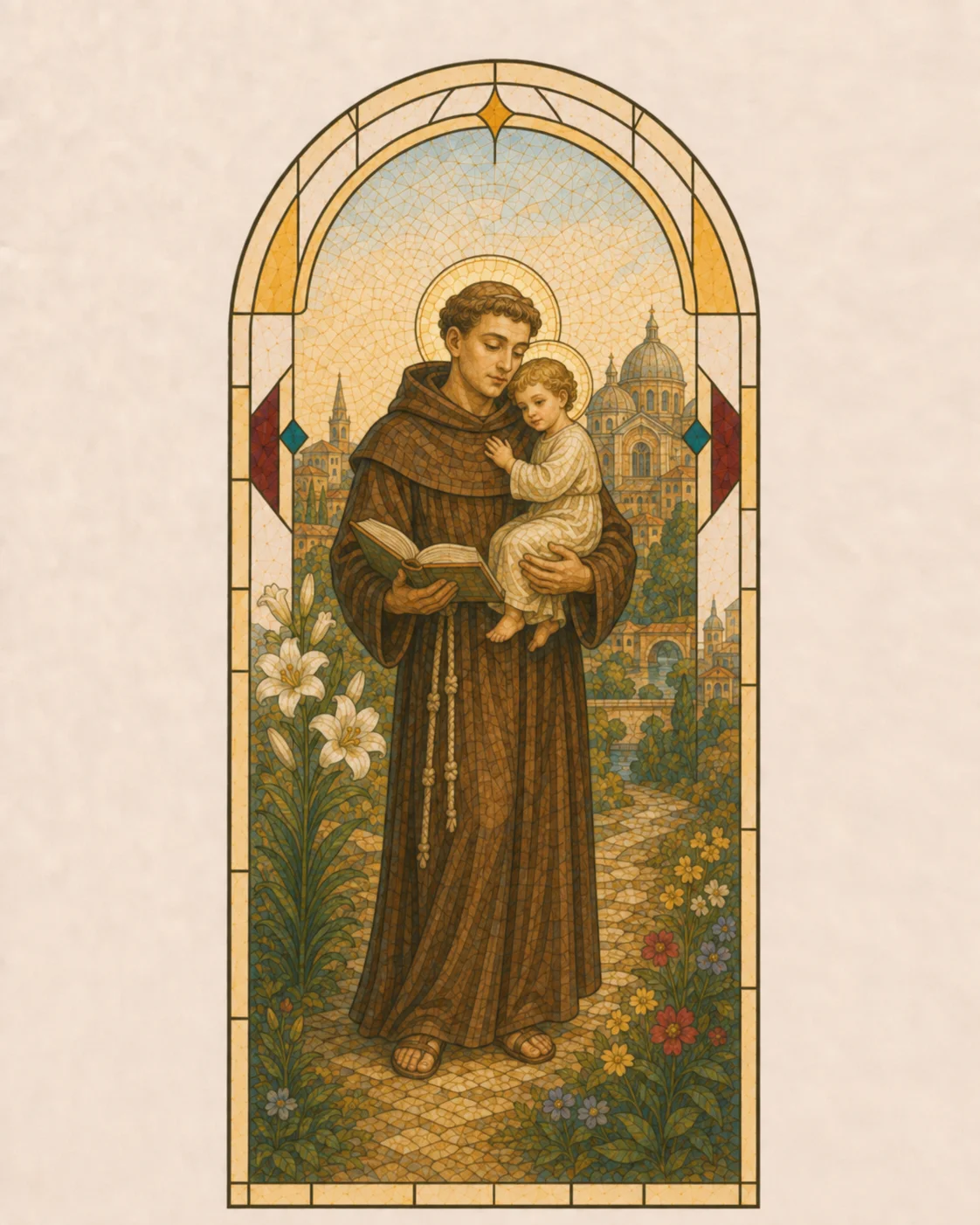
Saint12th–13th century · Feast 13
St Anthony of Padua was a Portuguese-born Franciscan priest, biblical scholar and powerful preacher whose unexpected journey from Augustinian study to Franciscan mission made him one of the Church’s earliest great Franciscan theologians, a defender of the poor and one of Christianity’s most beloved intercessors.
Saint13th century · Feast July 15
A Franciscan theologian and leader who joined rigorous study with contemplation and wonder before creation.
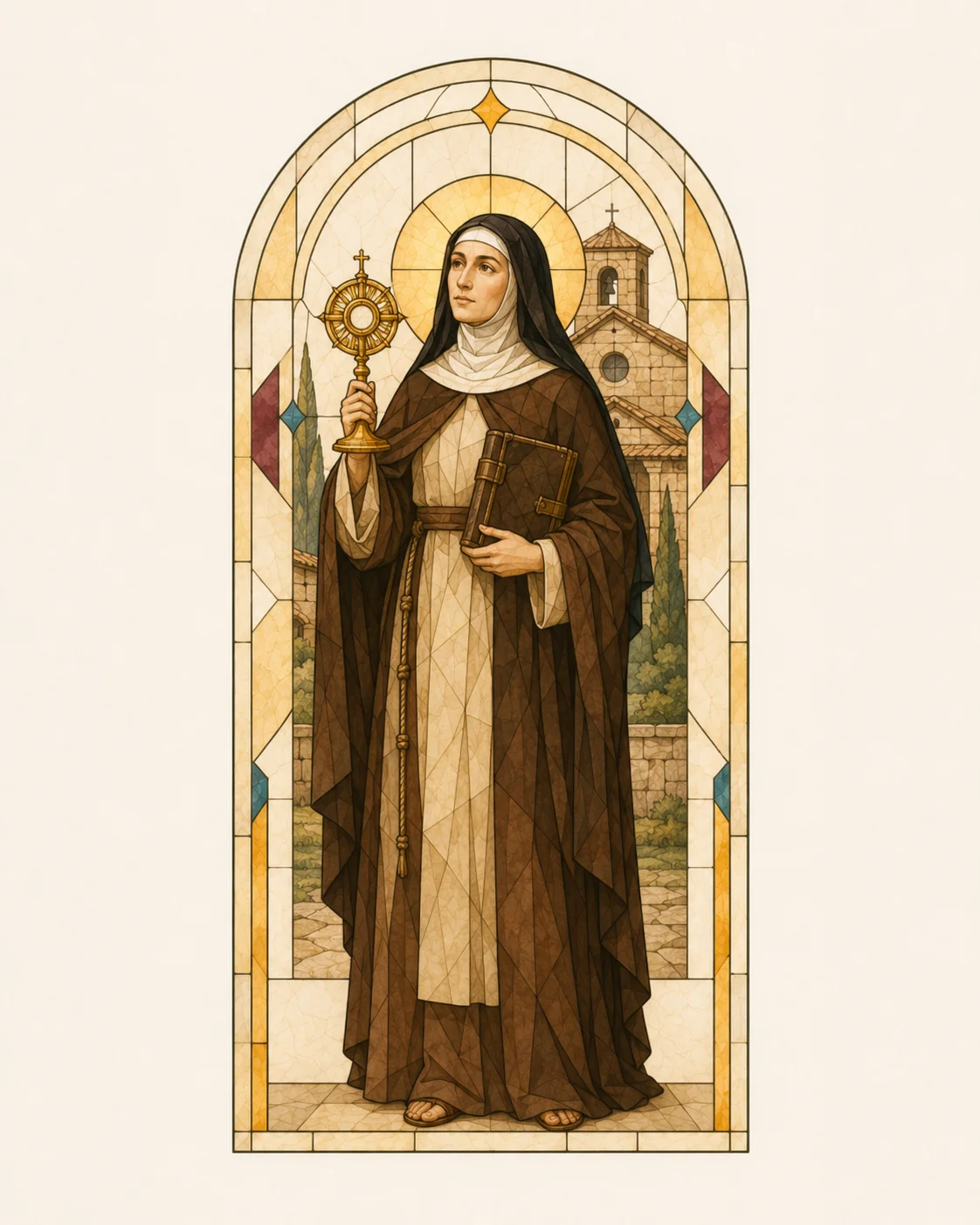
Saint12th–13th century · Feast August 11
A noblewoman who exchanged privilege for radical Gospel poverty, St Clare founded the Poor Clares and shaped a contemplative Franciscan life of prayer, sisterhood, Eucharistic faith and complete trust in God.
Saint13th century · Feast November 17
A royal wife and young widow who used wealth and status for people in poverty and founded a hospital.
Saint18th century · Feast July 1
A Franciscan missionary associated with the California mission system whose zeal must be studied alongside harm to Indigenous peoples.
Saint19th–20th century · Feast January 23
A German-born American Franciscan sister and hospital leader who established professional, compassionate care in Hawaii and Kalaupapa.
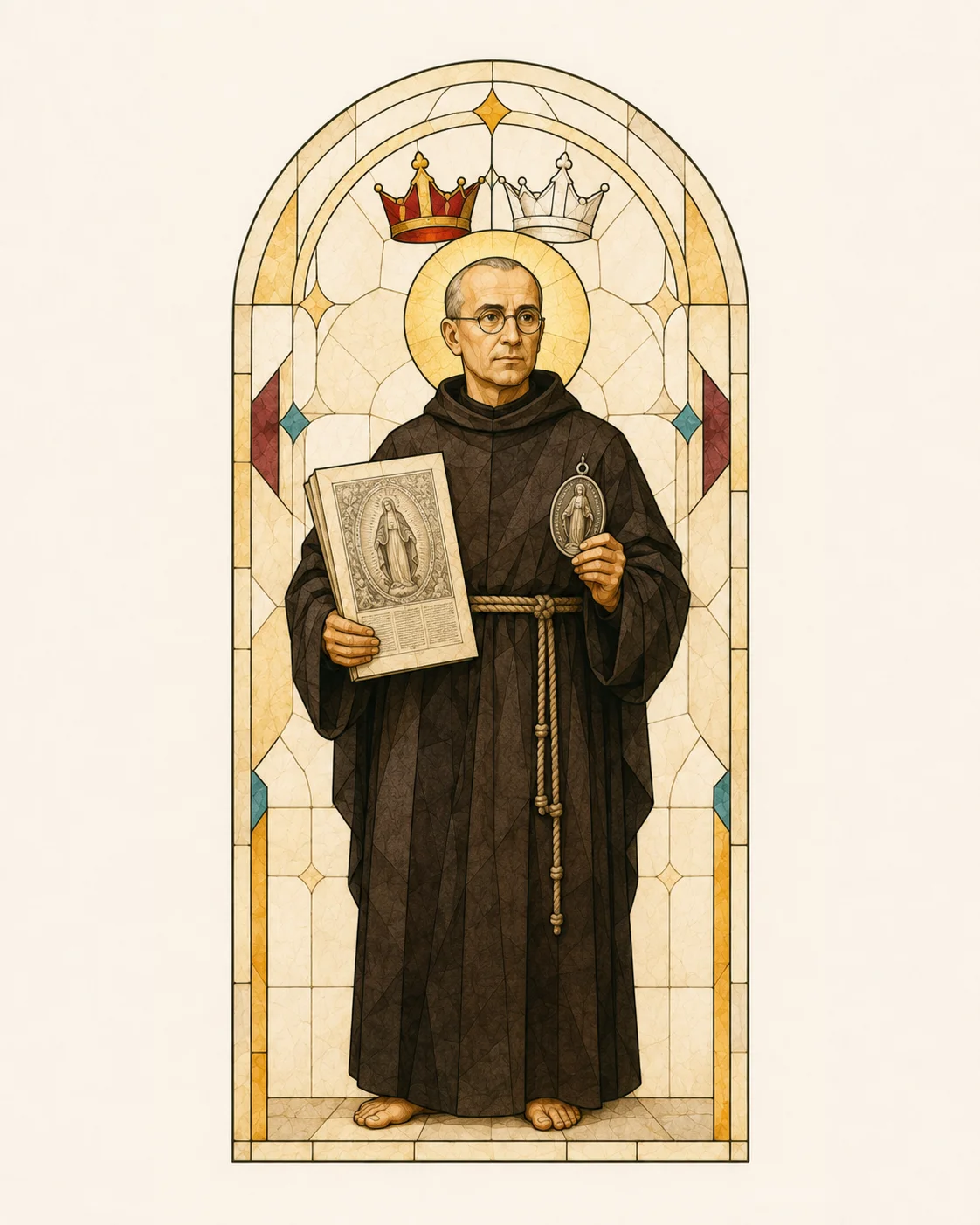
Saint19th–20th century · Feast August 14
A Polish Conventual Franciscan priest, missionary and media pioneer whose devotion to Christ through Mary culminated at Auschwitz, where he freely offered his life in place of another prisoner.
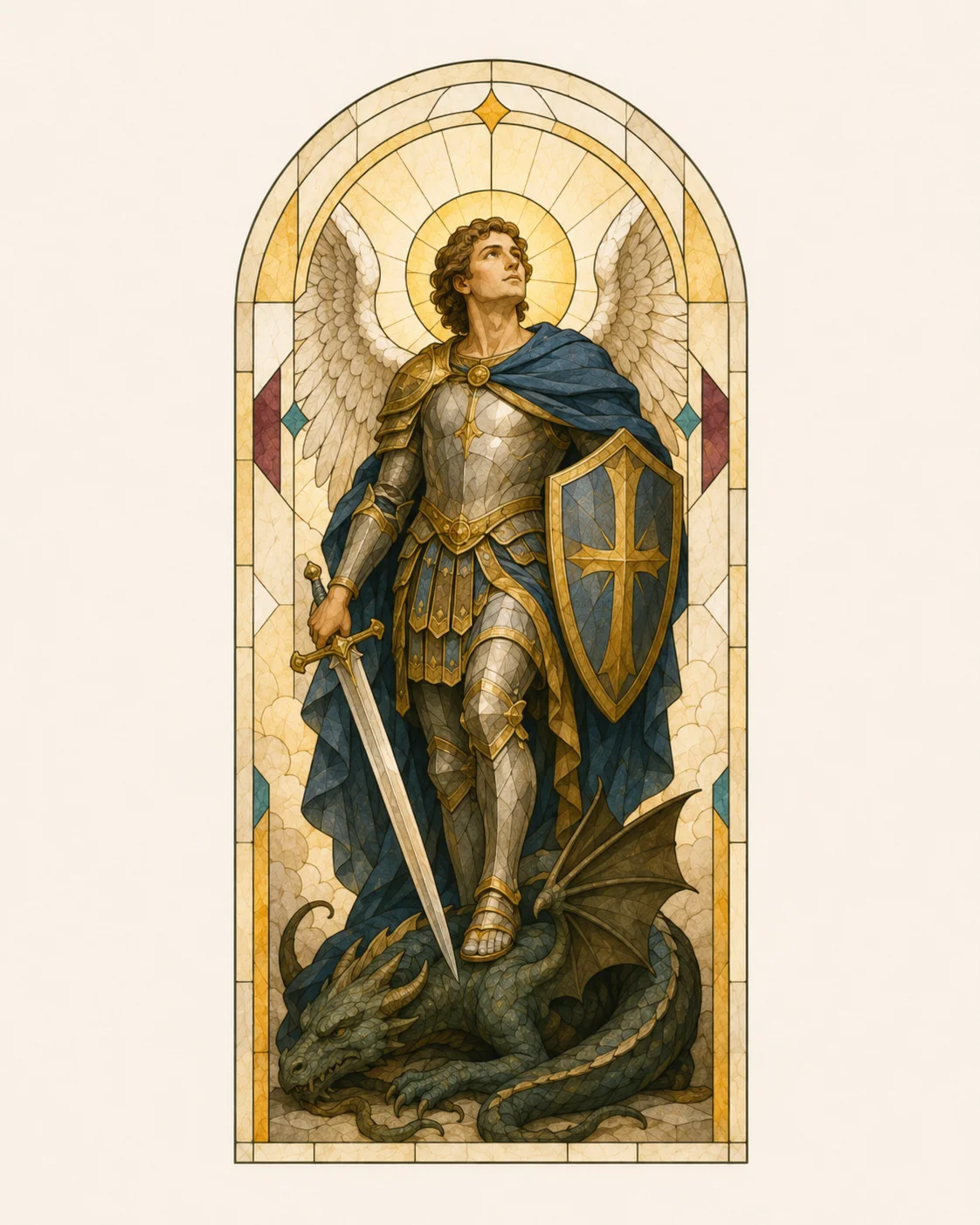
SaintNot applicable · Feast September 29
The archangel who stands for the unmatched sovereignty of God, St Michael appears in Scripture as defender of God’s people and leader of the heavenly hosts against the powers of evil.
Saint19th–20th century · Feast September 23
A Capuchin priest known for long hours of prayer, confession, spiritual guidance and patient endurance of illness and scrutiny.