Saint-specific
The Little Way
A gentle twelve-day introduction to the spirituality of St Thérèse — the confidence, smallness and trust at the heart of her Little Way.
12 days10 min / day
Saint19th century · Feast October 1
Also known as Little Flower, Thérèse Martin, Thérèse of the Child Jesus and the Holy Face, Saint Thérèse of the Child Jesus, Marie Françoise-Thérèse Martin, The Little Flower, The Little Flower of Jesus, Saint Therese of Lisieux
A young Carmelite nun whose “Little Way” of trust and love reveals that ordinary actions, accepted weakness and hidden sacrifice can become a path to profound holiness.
A Pathway is a short guided journey — a few minutes a day of story, scripture, reflection and prayer.
Saint-specific
A gentle twelve-day introduction to the spirituality of St Thérèse — the confidence, smallness and trust at the heart of her Little Way.
Merciful Father, through the intercession of St Thérèse, teach us to trust your love when we feel weak, ordinary or afraid. Help us to serve you in the small duties of each day, to love without seeking recognition and to remain faithful when prayer brings no consolation. Make our hidden acts of love fruitful for the Church and for the world. Amen.
Thérèse Martin was born in Alençon, France, on 2 January 1873, the youngest surviving daughter of Louis and Zélie Martin. She was baptised Marie Françoise-Thérèse two days later. Her parents created a loving Catholic home, but Thérèse’s early childhood was marked by loss when her mother died from breast cancer in August 1877. Louis then moved the family to Lisieux, where Thérèse was raised principally by her father and older sisters.
Thérèse was affectionate, imaginative and highly sensitive. When her sister Pauline, who had become a second mother to her, entered the Carmel of Lisieux, Thérèse experienced a serious emotional and physical illness. During Pentecost 1883, she believed that she was healed through the intercession of the Blessed Virgin Mary after seeing the statue in her room appear to smile at her.
She received her First Holy Communion on 8 May 1884 and Confirmation on 14 June. Although deeply devout, she continued to struggle with excessive sensitivity and scruples. On Christmas night in 1886, she experienced what she later called the grace of her complete conversion. She became more emotionally resilient and began directing her attention away from herself towards the spiritual good of others.
Soon afterwards, Thérèse prayed intensely for the conversion of Henri Pranzini, a convicted murderer awaiting execution. When she learned that he had kissed a crucifix shortly before his death, she interpreted this as a response to her prayer and as confirmation of her missionary vocation.
Thérèse desired to enter the Carmelite monastery at Lisieux, where two of her sisters had already become nuns. Because she was only fifteen, permission was initially refused. During a pilgrimage to Rome in 1887, she personally appealed to Pope Leo XIII. After further consideration by the relevant Church authorities, she entered the Carmel of Lisieux on 9 April 1888.
She received the Carmelite habit on 10 January 1889 and made her religious profession on 8 September 1890, taking the name Sister Thérèse of the Child Jesus and the Holy Face. Her religious life was hidden and outwardly uneventful. She prayed, participated in community life and undertook ordinary duties within the monastery. She was not protected from misunderstandings, irritation, physical discomfort or demanding relationships, but deliberately sought to respond through patience and small acts of charity.
Within this ordinary life, Thérèse developed the spirituality later called her “Little Way.” She recognised that she could not reach holiness through extraordinary achievements or reliance upon her own strength. Instead, she placed her confidence in God’s merciful love and sought to perform small actions with great love. Spiritual childhood, for Thérèse, did not mean immaturity or passivity. It meant acknowledging one’s dependence upon God while responding actively through trust, humility and charity.
Thérèse’s enclosed vocation was intensely missionary. She prayed and offered sacrifices for missionaries, corresponded with two missionary priests as spiritual brothers and longed for the Gospel to be proclaimed throughout the world. While meditating on Saint Paul’s teaching about the different members of the Church, she came to understand that her own vocation was to be love within the heart of the Church.
On 9 June 1895, Thérèse offered herself to God’s merciful love. During the final years of her life, she wrote the autobiographical manuscripts later published as Story of a Soul. These writings recount her childhood, religious vocation, spiritual discoveries and deepening confidence in God.
In April 1896, Thérèse experienced the first clear sign of the tuberculosis that would lead to her death. Alongside physical suffering, she underwent a prolonged trial of faith in which the certainty and consolation she had previously experienced were obscured. She continued to choose faith and love without relying upon consoling feelings.
Her illness worsened throughout 1897. She was transferred to the monastery infirmary in July and died on the evening of 30 September at the age of twenty-four. Her final words were an expression of love for God.
Story of a Soul was published the following year and spread rapidly throughout the world. Thérèse was beatified in 1923 and canonised by Pope Pius XI on 17 May 1925. In 1927 she was proclaimed Patroness of the Missions alongside St Francis Xavier. She was later named one of the patron saints of France.
On 19 October 1997, St John Paul II proclaimed Thérèse a Doctor of the Church. Her teaching continues to show that holiness is not reserved for people capable of impressive achievements. Trust in God, love expressed in ordinary circumstances and faithful acceptance of personal weakness can open a path of sanctity available to every Christian.
Thérèse lived during the French Third Republic, a period marked by rapid social change and growing tension between secular political institutions and the Catholic Church. Religious communities continued their work while facing an increasingly uncertain position within French public life.
She grew up in a prosperous Catholic artisan family in Normandy. The Martin household combined domestic affection, disciplined religious practice, work and service to people in need. Five surviving daughters of the family eventually entered religious life.
Thérèse’s enclosed Carmelite vocation existed alongside a major expansion of Catholic missionary activity in Africa, Asia and other parts of the world. Although she never left the monastery after entering Carmel, she understood prayer, sacrifice and correspondence as genuine participation in the Church’s missionary work.
Tuberculosis was widespread and often fatal in nineteenth-century Europe. There was no effective antibiotic treatment during Thérèse’s lifetime, and her final illness involved prolonged pain, weakness and difficulty breathing.
The Little Way of confidence and love; spiritual childhood understood as humble dependence upon God; holiness through ordinary duties; trust in divine mercy; hidden sacrifice; contemplative prayer; missionary intercession; love within the heart of the Church; devotion to the Child Jesus and the Holy Face; and persevering faith without emotional consolation.
St Thérèse speaks especially to people who believe they are too ordinary, weak or insignificant to become holy. Her life shows that holiness can be pursued through daily relationships, repetitive work, unnoticed sacrifice and small decisions to love.
She is an important companion for people struggling with perfectionism, scrupulosity or fear that God’s love must be earned through flawless behaviour. Her Little Way does not dismiss effort, but places effort within confidence in God’s mercy rather than anxious self-reliance.
Thérèse is also relevant to people who are highly sensitive, easily discouraged or emotionally overwhelmed. Her own growth did not erase her sensitivity; it gradually redirected it towards compassion, courage and concern for others.
Her final trial makes her meaningful to people experiencing spiritual dryness, doubt or the absence of religious consolation. She continued to choose faith and love even when she no longer felt the certainty and joy that had previously supported her.
Her experience of tuberculosis speaks to people living with chronic illness, deteriorating health, restricted independence or a shortened life. Her missionary vocation also encourages those who long to serve but are limited by health, family responsibilities, enclosure or circumstances beyond their control.
For missionaries, parish workers and people engaged in evangelisation, Thérèse demonstrates that mission must be rooted in love rather than pressure, ambition or the desire for recognition.
People turn to St Thérèse of Lisieux in matters of:
2 January 1873
Born in Alençon, France, to Louis and Zélie Martin.
4 January 1873
Baptised Marie Françoise-Thérèse at the Church of Notre-Dame in Alençon.
28 August 1877
Her mother, Zélie Martin, dies; the family later moves to Lisieux.
13 May 1883
Experiences healing during Pentecost through what she calls the smile of the Blessed Virgin Mary.
8 May 1884
Receives her First Holy Communion.
14 June 1884
Receives the Sacrament of Confirmation.
25 December 1886
Experiences the Christmas grace she later describes as her complete conversion.
1887
Prays for the conversion of the condemned prisoner Henri Pranzini.
20 November 1887
Appeals to Pope Leo XIII for permission to enter Carmel at the age of fifteen.
9 April 1888
Enters the Carmel of Lisieux.
10 January 1889
Receives the Discalced Carmelite habit.
8 September 1890
Makes her religious profession.
9 June 1895
Offers herself to God’s merciful love.
1895–1897
Writes the autobiographical manuscripts later published as Story of a Soul.
3 April 1896
Experiences the first haemorrhage indicating the tuberculosis that will lead to her death.
September 1896
Writes Manuscript B and describes her vocation as love in the heart of the Church.
8 July 1897
Is transferred permanently to the monastery infirmary.
30 September 1897
Dies at the Carmel of Lisieux at the age of twenty-four.
29 April 1923
Beatified by Pope Pius XI.
17 May 1925
Canonised by Pope Pius XI.
14 December 1927
Proclaimed Patroness of the Missions alongside St Francis Xavier.
3 May 1944
Proclaimed a secondary patroness of France.
19 October 1997
Proclaimed a Doctor of the Church by Pope St John Paul II.
October 1 · Memorial · Global
St Thérèse of Lisieux
Memorial in the General Roman Calendar
October 1 · Feast · Religious order
St Thérèse of the Child Jesus
Feast in the Carmelite calendar
Source-quality status: verified
Thematic
Married saints, parents and family companions for the honest work of everyday family life.
Thematic
A short pathway with saints whose lives passed through anxious seasons — and the small practices that steadied them.
Saint16th century · Feast December 3
A founding Jesuit who travelled across Asia as a missionary, adapting to unfamiliar cultures while longing to continue into China.
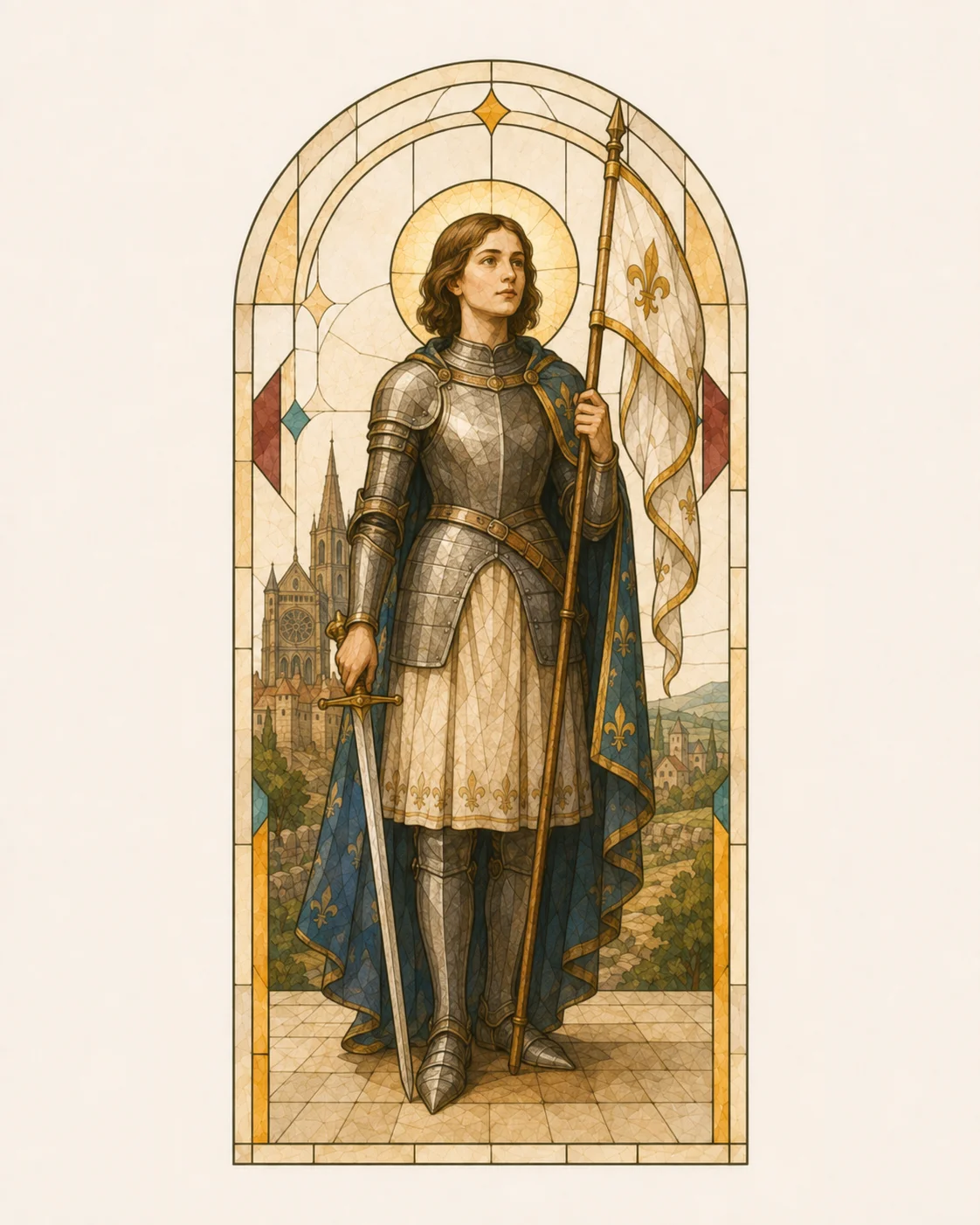
Saint15th century · Feast May 30
A teenage laywoman who answered an extraordinary call through prayer and courageous action, St Joan helped secure the coronation of Charles VII and remained faithful through capture, an unjust trial and death.
Saint16th century · Feast December 14
A Carmelite priest, reformer and poet who wrote about spiritual darkness and transforming union with God.
Saint19th century · Feast July 12
A French watchmaker, husband and father who shared family business and faith with Zélie, then raised their daughters after her death.
Saint20th century · Feast August 9
A Jewish-born philosopher, Catholic convert, teacher and Carmelite nun murdered at Auschwitz.
Saint16th century · Feast October 15
A Carmelite reformer and Doctor of the Church whose practical, honest teaching on prayer helps people grow from distraction toward deep friendship with Christ.
Saint19th century · Feast July 12
A French lacemaker, entrepreneur, wife and mother who balanced business, family, grief and breast cancer.